






What's Happening?
The Illinois State Police Special Operations Command Statewide Weapons of Mass Destruction team recently conducted a full-scale emergency response simulation at the Illinois State Fairgrounds in Springfield on October 7. This drill was designed to prepare
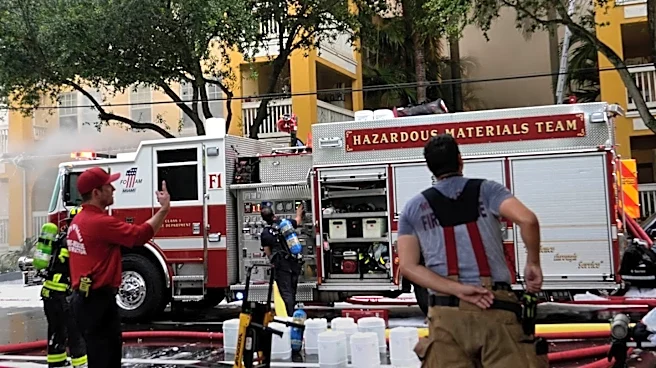
for an attack at a major event that escalates into a Chemical, Biological, Radiological, Nuclear, and Explosive (CBRNE) threat. Multiple agencies participated, including the Illinois Secretary of State Police, Illinois Emergency Management Agency and Office of Homeland Security, Springfield Fire Department, Illinois National Guard – 5th Civil Support Team, Federal Bureau of Investigation Springfield Field Office, Illinois Medical Emergency Response Team, and the Illinois Department of Agriculture. ISP Director Brendan F. Kelly stated that the goal was to test and evaluate the ability of law enforcement, fire services, and other partnering agencies to respond as a unified group during emergency situations, providing a no-fault learning environment to ensure readiness for real-world crises.
Why It's Important?
This drill is important for national security and public safety, as it directly addresses the preparedness of U.S. states to respond to catastrophic events. The simulation of a CBRNE attack highlights the complex coordination required among various federal, state, and local agencies. Such exercises are crucial for identifying gaps in response protocols, improving inter-agency communication, and refining tactical approaches to protect civilian populations. The involvement of multiple entities, from law enforcement to medical response teams, underscores the multi-faceted nature of modern threats and the necessity for integrated emergency management systems. Effective preparation can mitigate casualties, minimize panic, and ensure a more organized recovery in the event of an actual weapons of mass destruction incident, thereby safeguarding critical infrastructure and public trust.
What's Next?
Following the completion of this drill, participating agencies will likely conduct a thorough debriefing and analysis of their performance. This will involve evaluating the effectiveness of current protocols, identifying areas for improvement in communication and coordination, and potentially revising training programs. The insights gained from this simulation will inform future preparedness strategies and resource allocation for emergency response in Illinois and potentially serve as a model for other states. Ongoing training and periodic drills are expected to continue, ensuring that first responders remain proficient and adaptable to evolving threats. The continuous refinement of these emergency response plans is vital for maintaining a robust defense against potential weapons of mass destruction attacks.
Beyond the Headlines
The Illinois drill reflects a broader national concern regarding preparedness for unconventional warfare and terrorism. The reference to the Netflix show 'A House of Dynamite,' which depicts a federal government response to a potential nuclear missile launch, illustrates how public consciousness is increasingly aware of such threats. These simulations not only enhance operational readiness but also serve as a psychological reassurance to the public that authorities are actively preparing for worst-case scenarios. The ethical implications of 'launch on warning' strategies, as alluded to by the show, underscore the immense pressure and rapid decision-making required in such crises. The continuous investment in these drills signifies a proactive approach to national security, aiming to deter potential adversaries and protect democratic institutions from catastrophic disruption.