



What's Happening?
TU Delft researcher Zeynab Kaseb has become the first user to test the integration of Quantum Inspire, QuTech’s open cloud quantum computer, with DelftBlue, TU Delft’s high-performance computer. This workflow allows researchers to use DelftBlue for classical
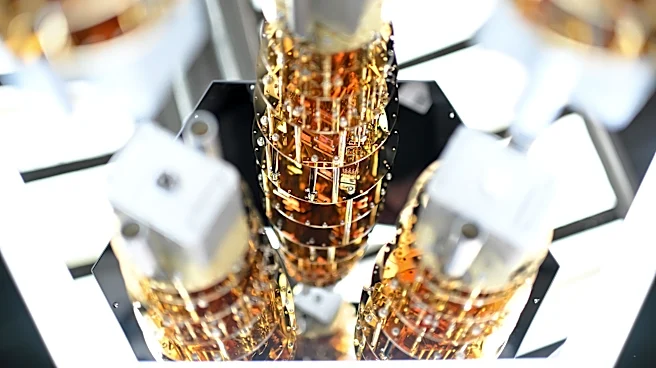
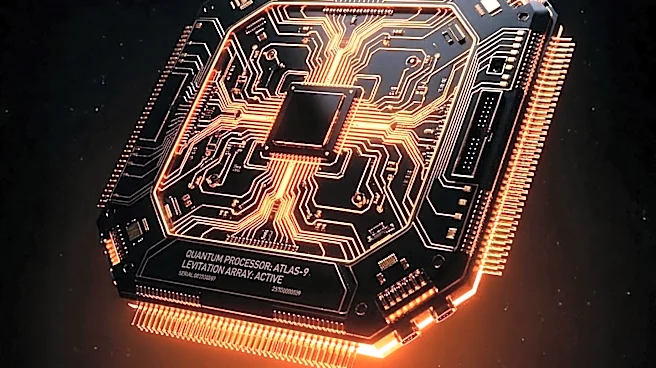
calculations and then send quantum circuits through Quantum Inspire to run on real-world quantum computers. Kaseb utilized this integrated infrastructure to study power flow in a small network, specifically exploring the Quantum Approximate Optimization Algorithm (QAOA). DelftBlue prepared and optimized the calculation, while Quantum Inspire provided access to the Tuna-17 quantum processor, returning measurements for analysis. This test demonstrates a complete route from classical calculation to quantum circuit execution and back to analysis.
Why It's Important?
This integration is important for the U.S. and global scientific community as it provides a practical framework for testing quantum algorithms on actual hardware while leveraging classical computing for preparation and assessment. For U.S. researchers and industries, this type of hybrid classical-quantum computing approach is crucial for advancing fields like energy management, materials science, and drug discovery. The ability to efficiently test quantum algorithms on real quantum processors, even for small-scale problems, accelerates the development of more robust and scalable quantum solutions. This collaboration between high-performance classical computing and quantum computing is a key step towards realizing the full potential of quantum technology, which could lead to significant breakthroughs in various sectors, including national infrastructure and defense.
What's Next?
The successful test by Zeynab Kaseb paves the way for many more exciting results from the integrated infrastructure of Quantum Inspire and DelftBlue. Researchers will continue to use this workflow to test quantum algorithms on hardware, gaining valuable insights into how circuit complexity affects outcomes and how to optimize quantum calculations. The goal is to further integrate classical HPC computers and quantum computers to tackle increasingly complex problems. This ongoing research will contribute to the development of more advanced quantum processors and algorithms, ultimately bringing the world closer to practical, fault-tolerant quantum computing. Future work will likely focus on scaling these experiments to larger qubit counts and more intricate real-world applications.
Beyond the Headlines
The integration of classical supercomputers with quantum computing platforms, as demonstrated by TU Delft, represents a critical evolutionary step in the computational landscape. This hybrid approach acknowledges the current limitations of quantum hardware while maximizing its potential by offloading preparatory and analytical tasks to powerful classical systems. This development has profound implications for the future of scientific research and technological innovation, suggesting a future where quantum computers augment, rather than entirely replace, classical supercomputers. It also highlights the increasing importance of interdisciplinary collaboration between quantum physicists, computer scientists, and engineers to bridge the gap between theoretical quantum advantages and practical applications. The ethical considerations around the power grid optimization, for instance, could involve ensuring equitable access to resources and preventing potential vulnerabilities in critical infrastructure.