






What's Happening?
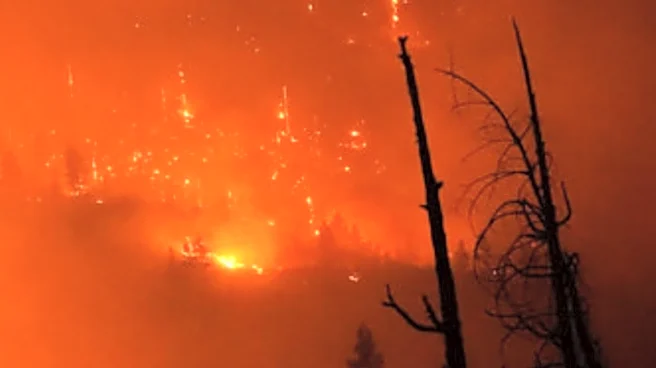
A new interdisciplinary study conducted by McGill researchers has revealed that wildfires pose a growing threat to life-sustaining dialysis care for thousands of Canadians. The study, a national wildfire risk assessment, integrated dialysis facility locations
with historical wildfire records and current fire danger data using Geographic Information Systems (GIS). It found that approximately 30% of dialysis facilities have been located within five kilometers of at least one recorded wildfire over the past three decades. Furthermore, based on current conditions, 64% of these facilities are situated in areas classified as high, very high, or extreme wildfire risk, serving two-thirds of Canadians receiving in-center hemodialysis. Dialysis patients require complex care multiple times a week, which depends on uninterrupted access to equipment, electricity, clean water, trained personnel, and transportation.
Why It's Important?
This study highlights a critical public health vulnerability exacerbated by increasingly severe wildfire seasons. The disruption of dialysis care can have immediate and life-threatening consequences for patients who rely on it for survival. The findings underscore the need for robust emergency planning that specifically addresses the unique needs of vulnerable populations, such as dialysis patients, in the face of climate-related hazards. The interdisciplinary approach, bridging healthcare, geography, and climate science, is vital for developing comprehensive risk assessments and protective measures. The economic impact of such disruptions can also be significant, as healthcare systems must divert resources to manage emergencies and ensure continuity of care, potentially straining budgets and personnel. This situation emphasizes the broader societal cost of climate change beyond direct property damage and environmental degradation.
What's Next?
The McGill research team is currently exploring how this risk-mapping approach can be extended to assess other climate-related hazards, suggesting a broader application for proactive emergency planning. The findings are expected to inform and influence emergency preparedness strategies for healthcare facilities, particularly those serving critical care patients. Collaborations between healthcare providers, emergency management agencies, and environmental scientists will become increasingly important to develop resilient infrastructure and protocols. This may include establishing alternative care sites, ensuring backup power and water supplies, and developing evacuation plans tailored to the specific needs of dialysis patients. The study's insights could also prompt policy discussions on land use planning and infrastructure development in wildfire-prone regions to minimize risks to essential services.
Beyond the Headlines
The vulnerability of dialysis patients to wildfires exposes a deeper systemic challenge in how societies prepare for and respond to climate change impacts. It highlights the interconnectedness of environmental events with public health infrastructure and the disproportionate impact on medically fragile populations. The study implicitly calls for a re-evaluation of healthcare system resilience in the face of escalating environmental threats. Beyond immediate emergency response, there's a need for long-term strategies that integrate climate adaptation into urban planning, healthcare policy, and resource allocation. This includes considering the ethical implications of resource scarcity during disasters and ensuring equitable access to life-sustaining treatments. The increasing frequency and intensity of wildfires, as seen in Canada's worst wildfire season in 2023, serve as a stark reminder that climate change is not just an environmental issue but a profound public health and social justice challenge.