




What's Happening?
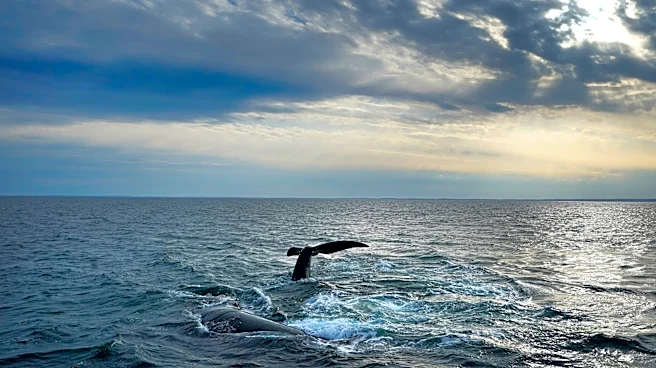
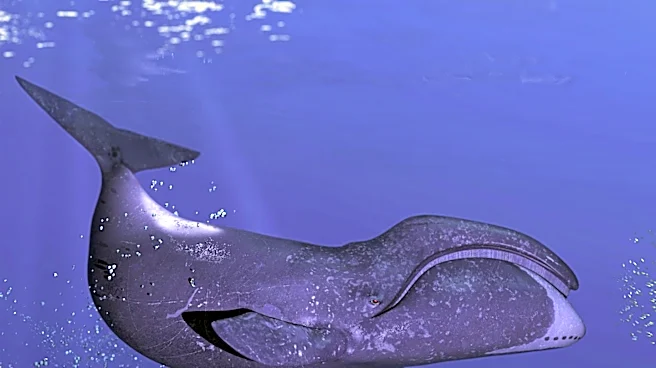
The population of the critically endangered North Atlantic right whale has experienced a decline, falling to 382 animals, according to the latest annual estimate from a consortium of scientists. This represents approximately a 2% decrease from the previous
year, reversing a recent trend of slow but steady growth. Scientists are expressing significant concern that the species remains at risk of extinction. The whales, which were severely depleted by commercial whaling centuries ago, continue to face major threats today, primarily entanglement in fishing gear and collisions with ships. Additionally, a warming ocean is causing their primary food source, copepods, to shift, leading the whales into unprotected areas where these threats are more prevalent.
Why It's Important?
The continued decline in the North Atlantic right whale population is a critical environmental concern, highlighting the ongoing challenges in protecting endangered marine species. With only 73 reproductive females remaining, the species' ability to recover is severely hampered. This situation underscores the urgent need for more effective conservation measures and stricter regulations to mitigate human-induced threats. The economic implications are also significant, as conservation efforts often involve balancing environmental protection with commercial fishing and shipping interests. The debate over proposed delays to new right whale protections, intended to safeguard commercial fishing, illustrates the tension between economic activities and species preservation. Failure to protect these whales could lead to irreversible ecological consequences and a significant loss of marine biodiversity.
What's Next?
Conservation groups, such as Oceana, are advocating for immediate and robust protections to prevent further decline in the North Atlantic right whale population. They strongly oppose legislative proposals, like the one passed by the U.S. House of Representatives, that seek to delay new protections until 2035. Scientists and conservationists emphasize the necessity of years with high birth rates combined with enhanced protective measures to allow the population to rebuild. This includes implementing measures to reduce entanglements in fishing gear and prevent ship strikes across the whales' migratory routes, which span from calving grounds off the Carolinas, Florida, and Georgia to feeding grounds off New England and Canada. The ongoing monitoring of the population and advocacy for stronger regulations will be crucial in the coming years.
Beyond the Headlines
The plight of the North Atlantic right whale serves as a poignant symbol of the broader impact of climate change and human activity on marine ecosystems. The warming ocean's effect on their food supply forces these whales into new, more dangerous territories, illustrating how interconnected environmental changes can exacerbate existing threats. This situation raises ethical questions about humanity's responsibility to protect vulnerable species and the long-term consequences of industrial practices. The struggle to balance economic interests with ecological preservation reflects a fundamental challenge in modern society. The outcome for the North Atlantic right whale will not only determine the fate of an iconic species but also offer insights into the effectiveness of global conservation strategies in an era of rapid environmental change.