







What's Happening?
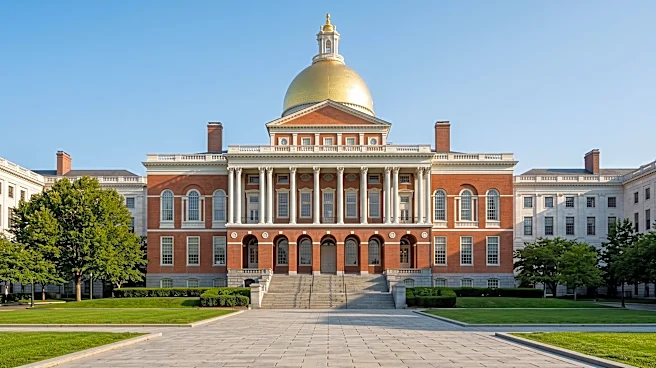
Massachusetts Governor Maura Healey has announced a pause on accepting data center sales tax exemption applications. This decision comes as the state seeks to implement stronger protections for communities against potential negative impacts from future
data center development. Concurrently, the Healey Administration has released a framework outlining expectations for data centers operating in Massachusetts. This framework suggests that data centers should procure 100% clean energy, establish water protection standards, and engage in community benefits agreements. While currently not legally binding, many of these expectations have been incorporated into the Senate's version of the energy affordability bill, which is now under negotiation between the House and Senate. This cautious approach reflects growing concerns over data centers' significant power consumption and their potential to increase energy bills and adversely affect public health, particularly through the use of fossil fuel backup generators. Several municipalities, including Westfield, Lowell, and Holyoke, have also taken independent action, with some enacting moratoriums or outright bans on new data center development.
Why It's Important?
The actions taken by Massachusetts and its municipalities highlight a growing tension between technological expansion and environmental/community welfare. Data centers are massive consumers of electricity, and their proliferation can significantly impact regional power grids and energy costs. In New England, where energy prices are already high, an influx of data centers could further drive up electricity bills for all consumers. The debate also touches upon the broader issue of corporate responsibility, as the framework encourages data centers to adopt 100% clean energy and implement community benefits. The lack of specific prohibitions against fossil fuel backup generators in current proposals is a critical point of contention, as these generators can negatively affect local air quality and public health. This situation underscores the need for robust regulatory frameworks that balance economic development with environmental sustainability and community protection, setting a precedent for how other states might address similar challenges posed by energy-intensive industries.
What's Next?
The energy affordability bill, which includes many of the proposed data center expectations, is currently being negotiated by a conference committee of the House and Senate. The outcome of these negotiations will determine the final legal requirements for data centers in Massachusetts. Advocates are pushing for more explicit protections, such as a ban on fossil fuel backup generators, prevention of water rate hikes, and increased transparency from data center developers. The legal challenge filed by the Markley Group against Lowell's moratorium on data center expansion will also be a key development to watch, as it could set a precedent for how existing data centers are regulated. Furthermore, the Public Utilities Commission in Rhode Island is requiring Rhode Island Energy to file a large load tariff, which could serve as a model for Massachusetts to ensure that data centers bear the full cost of their grid impact, rather than shifting costs to residential customers.
Beyond the Headlines
This situation in Massachusetts reflects a broader national and global challenge concerning the environmental footprint of the digital economy. As reliance on digital services grows, so does the demand for data centers, which are essential infrastructure but also significant energy consumers. The debate extends beyond mere energy consumption to issues of environmental justice, as the deployment of fossil fuel backup generators disproportionately affects the public health of local communities. The push for 'Bring Your Own Clean Power' (BYOCP) policies and specific tariffs for large energy users like data centers represents an innovative approach to internalizing the environmental and infrastructure costs associated with these facilities. This could lead to a paradigm shift in how energy-intensive industries are integrated into local economies, emphasizing sustainable practices and equitable cost distribution. The actions in Massachusetts could influence policy discussions in other states grappling with similar concerns, potentially leading to more stringent regulations for data center development across the U.S.