






What's Happening?
At the NTT R&D Forum 2026, NTT showcased its advancements in photonics-based quantum computing and space computing. NTT is developing a photonics-based quantum computer in collaboration with the startup OptQC, aiming for a fault-tolerant, million-qubit-class
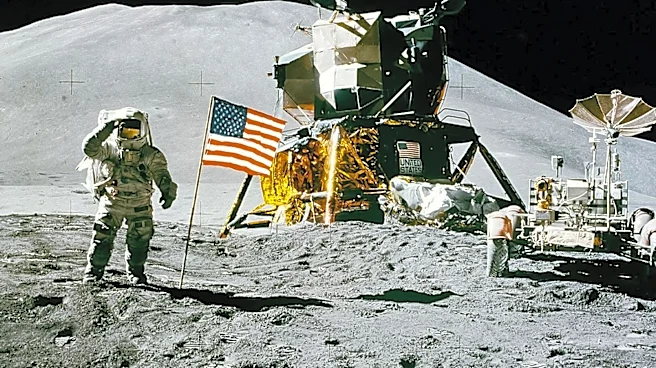
machine by fiscal year 2030. This initiative leverages optical technologies to overcome significant challenges in large-scale quantum computing, specifically power consumption and cooling requirements. The forum also highlighted NTT's IOWN (Innovative Optical and Wireless Network) initiative, which extends photonics into space under the 'NTT C89' brand, aiming to create a seamless communication and data distribution platform between satellites and Earth. This includes R&D for lunar surface communication and energy transmission, addressing the explosive growth of data from satellite imagery and the need for efficient data transfer in space.
Why It's Important?
NTT's focus on photonics-based quantum computing and space computing has profound implications for the U.S. technology landscape and global innovation. By addressing power and cooling challenges, photonics could accelerate the development of practical, large-scale quantum computers, potentially revolutionizing fields from cryptography to drug discovery. The expansion of IOWN into space, particularly with lunar initiatives, signifies a critical step towards establishing robust communication and computing infrastructure beyond Earth. This could support future space exploration, resource utilization, and defense capabilities, impacting U.S. aerospace and defense industries. The ability to process data in space before returning it to Earth, as mentioned by CEO Shimada, could also enhance efficiency in applications like disaster tracking, offering significant societal benefits and fostering international collaboration in space technology.
What's Next?
NTT's roadmap includes achieving a fault-tolerant, million-qubit-class photonics-based quantum computer by FY2030. This will involve continued collaboration with partners like OptQC and ongoing research into optical quantum hardware and software. In space computing, NTT will pursue its 'NTT C89' initiative, focusing on connecting data centers in space and establishing Earth-Moon communication. This includes ongoing R&D with partners like MBRYONICS for space optical transceivers and Cailabs for linking optical ground stations to NTT’s All-Photonics Network. The company will also continue to explore AI processing of data in space to manage the anticipated 230 petabytes of data per day by 2033. These efforts will require significant investment in infrastructure and continued technological breakthroughs in optical communication and computing.
Beyond the Headlines
The convergence of photonics, quantum computing, and space technology represents a frontier of innovation that could redefine our understanding of computing and connectivity. The ambition to build a million-qubit quantum computer and establish lunar communication infrastructure points to a future where computational power is vastly increased and connectivity is truly global, extending beyond Earth's atmosphere. This raises deeper questions about data sovereignty in space, the ethical implications of advanced AI processing in remote environments, and the potential for new forms of international cooperation or competition in the 'new space race.' The shift towards light-based computing also signifies a fundamental change in how we design and power our technological infrastructure, moving away from traditional electronics to more energy-efficient and high-bandwidth optical systems.