




What's Happening?
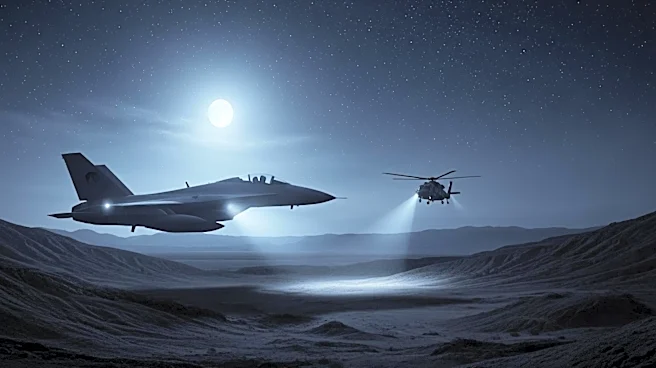
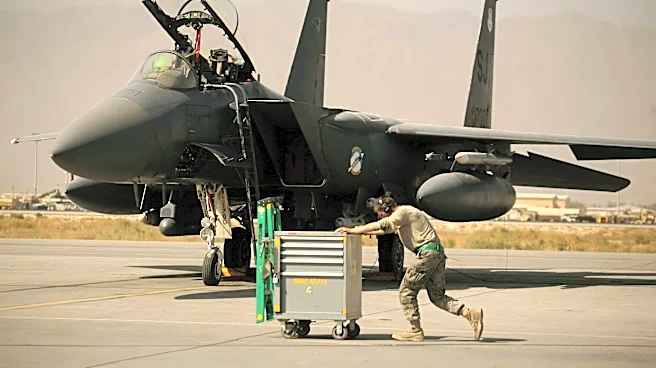
An American Air Force colonel was forced to eject from an F-15E fighter jet over southwest Iran and survived nearly two days behind enemy lines. The colonel took shelter in a rocky mountain crevice while U.S. forces launched an urgent and high-risk rescue
mission to retrieve him before armed Iranian forces could locate him. The operation was complex and perilous, involving multiple officials familiar with the situation. The rescue highlights the challenges and risks associated with military operations in hostile territories.
Why It's Important?
This rescue operation underscores the ongoing tensions between the U.S. and Iran, highlighting the potential for military confrontations in the region. The successful extraction of the airman demonstrates the U.S. military's capability and commitment to recovering its personnel, even in hostile environments. It also reflects the strategic importance of maintaining readiness and operational effectiveness in volatile areas. The incident may influence U.S. military policies and strategies in the Middle East, potentially affecting diplomatic relations and defense postures.
What's Next?
The successful rescue may lead to increased scrutiny of U.S. military operations in the region, with potential implications for future engagements. It could prompt discussions within the U.S. government and military about the risks and benefits of operating in such high-stakes environments. Additionally, the incident may impact diplomatic relations with Iran, possibly leading to heightened tensions or calls for diplomatic engagement to prevent future incidents. The U.S. military may also review and adjust its protocols for personnel recovery in hostile territories.