
What's Happening?
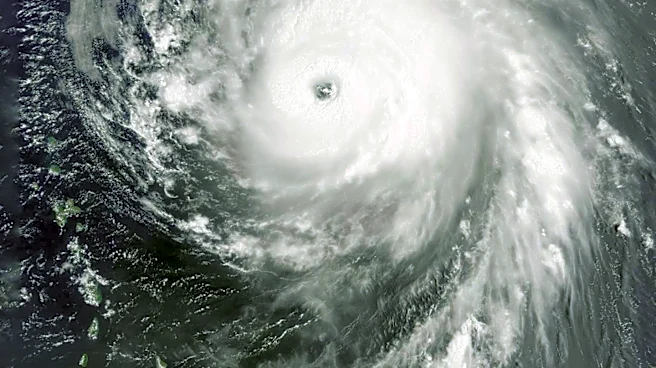
Typhoon Noul has made landfall in southern China, prompting the evacuation of more than 715,000 people in Guangdong province. The typhoon, which brought strong winds and heavy rain, has led to the cancellation
of numerous flights in the region, including over 350 flights in Hong Kong. The storm intensified with maximum sustained winds of 90 mph as it moved across the South China Sea, making landfall in Huidong county. The region remains on high alert as the typhoon progresses inland, causing significant disruptions to transportation and daily life.
Why It's Important?
The impact of Typhoon Noul is significant as it affects a densely populated and economically vital region of China. The mass evacuation and flight cancellations highlight the severe disruptions to both local communities and international travel. The typhoon's path through a major economic hub could have broader implications for supply chains and economic activities in the region. Additionally, the response to such natural disasters is critical in assessing the preparedness and resilience of infrastructure and emergency services in handling extreme weather events.
What's Next?
As Typhoon Noul continues to move inland, authorities are likely to focus on managing the aftermath, including restoring transportation services and assessing damage. The response from local governments and emergency services will be crucial in mitigating the impact on affected communities. There may also be increased scrutiny on infrastructure resilience and disaster preparedness in the wake of the typhoon. The situation could prompt discussions on improving early warning systems and emergency response strategies to better handle future natural disasters.