







What's Happening?
The United Nations World Food Programme (WFP) has reported that essential food commodity prices in Afghanistan remained significantly higher in the first week of October compared to a year ago. This situation is exacerbated by limited job opportunities
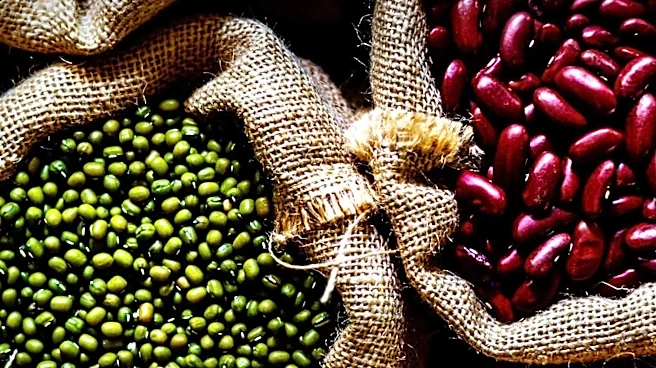
and declining purchasing power, which continue to strain households' ability to afford food. WFP's weekly market assessment indicated modest week-on-week price movements but persistent annual increases for staples like rice, wheat, cooking oil, sugar, and salt. High fuel and fertilizer costs are also contributing to pressure on transportation, agricultural production, and supply chains. Wheat grain and low-price wheat flour were 10% more expensive than last year, while high-price wheat flour increased by 6%. Rice varieties, Palawi and Sholae, were 17% and 31% higher, respectively, than their year-earlier prices. The purchasing power of an unskilled laborer's daily wage, measured in kilograms of low-price wheat flour, was 13% below the year-earlier level and 12% below the three-year average.
Why It's Important?
The persistent high food prices and diminished purchasing power in Afghanistan highlight a severe humanitarian crisis with significant implications for the population's food security and overall well-being. The WFP's findings underscore the fragility of the Afghan economy, where a large portion of the population relies on casual labor. Reduced employment opportunities and lower wages mean that even when food prices show slight weekly declines, the real cost of food remains prohibitive for many. This situation can lead to increased malnutrition, health crises, and social instability. The reliance on imported goods and the impact of global commodity prices, such as fuel and fertilizer, further expose the vulnerability of Afghanistan's food system. International aid organizations, including the WFP, play a critical role in monitoring these conditions and providing assistance, but the scale of the problem suggests a need for broader economic interventions and sustainable development strategies to address the root causes of food insecurity.
What's Next?
The WFP will continue its weekly market monitoring to track changes in food prices and economic indicators, assessing how market conditions affect households' ability to meet basic food needs. Given the ongoing financial pressure on Afghan households, particularly those dependent on daily wages or livestock income, humanitarian aid efforts are likely to remain crucial. International organizations and donor countries will need to evaluate the effectiveness of current aid programs and potentially increase support to prevent a further deterioration of the humanitarian situation. Efforts to stabilize the Afghan economy, create job opportunities, and support agricultural production could also be explored, though these are complex undertakings given the current political and economic landscape. The long-term outlook suggests that without significant improvements in employment and income generation, food insecurity will remain a pressing issue for a substantial portion of the Afghan population.
Beyond the Headlines
The situation in Afghanistan extends beyond immediate food prices and purchasing power, revealing deeper systemic issues. The erosion of household purchasing power reflects a broader economic collapse, impacting not only food access but also education, healthcare, and overall quality of life. The vulnerability of unskilled laborers and livestock-dependent households points to a lack of diverse economic opportunities and a fragile agricultural sector susceptible to external shocks like fuel and fertilizer costs. This ongoing crisis could lead to long-term developmental setbacks, including increased child labor, forced displacement, and a generation facing chronic malnutrition and limited educational prospects. The international community's response will not only address immediate humanitarian needs but also shape the future stability and development trajectory of Afghanistan, highlighting the interconnectedness of economic stability, food security, and human rights.