






What's Happening?
Governor Abigail Spanberger has formally requested that the Trump Administration re-evaluate its decision to allow 330 million metric tons of ground beef to enter the U.S. tariff-free for discounted sale. According to a release from the Governor's Office,
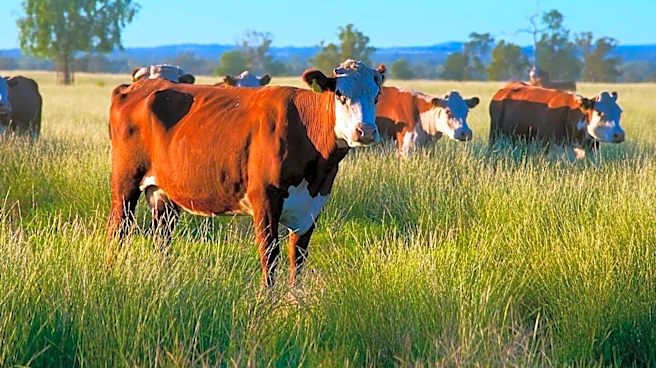
Spanberger views this policy as "catastrophic, ill-conceived, and deeply damaging" to the U.S. cattle industry, particularly impacting Virginia's beef producers. Virginia's beef cattle industry, comprising over 21,000 producers and 575,000 head of cattle, contributed more than $712 million to the Commonwealth's economy in 2024. The Governor highlighted that this policy would harm predominantly family-run operations by flooding the market with government-subsidized, imported beef, thereby negatively affecting cattle markets without guaranteeing retail price relief for consumers. Richard Fox, an Albemarle County cow-calf producer, echoed these concerns, pointing out that major meatpackers are closing facilities, and the industry is facing challenges from high input costs like fuel and fertilizer. Fox also suggested that the 'Prime Act' by Congressman Thomas Massie (R-KY) could introduce more competition by allowing smaller, in-state beef processors to operate, potentially leading to better beef cuts at lower prices for consumers and fair prices for farmers.
Why It's Important?
This development is significant for the U.S. agricultural sector, particularly the beef cattle industry, as it highlights the ongoing tension between trade policies and domestic industry protection. The influx of tariff-free, discounted imported beef could severely undermine the profitability and sustainability of American cattle producers, who are already grappling with rising operational costs and market consolidation. The policy's potential to depress cattle prices and reduce demand for domestically raised beef could lead to financial instability for thousands of family farms and ranches across the country. Furthermore, the discussion around the 'Prime Act' underscores a broader debate about market competition and the dominance of a few large meatpacking companies, some of which are foreign-owned. Ensuring fair market practices and supporting smaller processors could be crucial for the long-term health and resilience of the U.S. beef supply chain, benefiting both producers through fair compensation and consumers through competitive pricing and product availability.
What's Next?
Governor Spanberger has urged the USDA and the Trump Administration to reconsider their actions and prioritize strengthening the domestic herd and supporting the long-term growth of the beef cattle industry. She called for collaboration between administrations to improve risk management offerings for beef producers, such as Livestock Risk Protection, and to fully enforce the Packers and Stockyards Act to ensure market fairness. Additionally, Spanberger emphasized the need to ensure cattle producers have access to price transparency, discovery, and reporting, and to strategically expand and stabilize regional packing capacity. The advocacy for the 'Prime Act' by Congressman Thomas Massie (R-KY) suggests a legislative avenue for addressing market concentration and fostering competition among beef processors. The outcome of these appeals and potential legislative efforts will determine the future landscape for U.S. beef producers and consumers, influencing market dynamics, pricing, and the viability of domestic cattle operations.
Beyond the Headlines
The debate over tariff-free beef imports and market competition in the meatpacking industry touches upon fundamental economic and ethical considerations. The consolidation of the meatpacking industry, with only four major companies dominating the U.S. market, raises questions about antitrust enforcement and the potential for anti-competitive practices. The policy's impact on family farms highlights the vulnerability of small and medium-sized agricultural businesses to large-scale trade agreements and corporate power. Beyond economic implications, there are ethical dimensions concerning the sustainability of food systems and the fair treatment of producers. The call for increased competition and support for smaller processors reflects a desire for a more decentralized and resilient food supply chain, which could offer greater food security and economic equity. This situation also underscores the complex interplay between federal trade policies, agricultural regulations, and the livelihoods of American farmers, revealing how seemingly distant policy decisions can have profound local impacts.