





What's Happening?
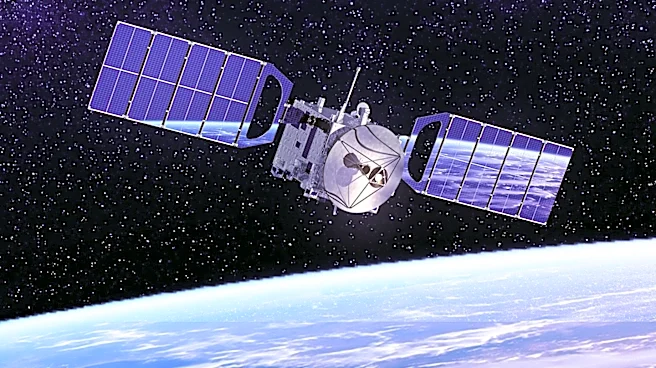
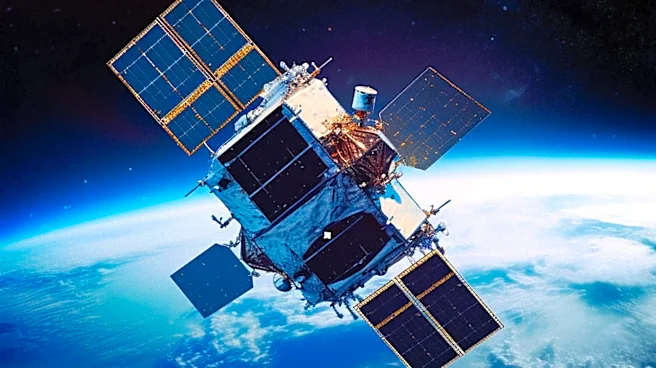
The U.S. Space Force is preparing to launch hundreds of satellites with numerous sensors into orbit, which will generate vast amounts of data for commanders. However, a new report by the Mitchell Institute for Aerospace Studies, authored by retired Air
Force Col. Jennifer Reeves, indicates that the current long-standing method of communicating data via radio frequencies (RF) could create significant data bottlenecks. The report, to be released on October 1, advocates for a hybrid system combining RF with optical communications technology, or laser comms, to address this issue. Reeves highlights that the military's space-based sensors and communication systems are producing up to 200 times more data than two decades ago, and the ability to collect this data has not been matched by the capacity to deliver it quickly to users. The Space Development Agency (SDA) is already planning to deploy hundreds of data transport satellites with optical communications terminals in low-Earth orbit as part of its Proliferated Warfighter Space Architecture, which Reeves considers an important step.
Why It's Important?
The data bottleneck identified in the report poses a critical challenge to the U.S. Space Force's operational effectiveness and national security. The inability to rapidly deliver vast troves of data from space to users could slow down and hinder future military operations, potentially impacting decision-making and response times in critical situations. Laser communications offer a solution by being harder to disrupt and capable of transmitting data 10 to 40 times faster than traditional RF methods, with a beam nearly 1,000 times narrower. This enhanced speed and security are vital for maintaining a strategic advantage in an increasingly contested space domain. While RF communications are widespread and reliable, their broad footprint makes them susceptible to detection, interception, and jamming. The adoption of a hybrid RF/laser system would provide a more resilient and efficient communication architecture, ensuring that warfighters receive timely and critical information, thereby enhancing overall mission success and national defense capabilities.
What's Next?
The Mitchell Institute report recommends that the U.S. Space Force accelerate and sustain communications modernization through stable resourcing and adaptive acquisition, operationalize hybrid RF-optical architectures across the force, and lead interoperability and standards development for the future communications ecosystem. While the Space Development Agency is moving forward with laser comms, there has been pushback, including a 2025 Government Accountability Office report that criticized the service for spending significantly on the technology before it was fully ready. Despite these concerns, the report emphasizes the urgency, noting that an initial operational capability could be established within five years if Congress and the Department of the Air Force prioritize funding. The Space Force is also working on its Enterprise Space Terminal program, a $100 million prototyping initiative to build smaller, lighter laser comms terminals. The report also highlights that China is actively developing its own laser communication satellite constellations, underscoring the competitive imperative for the U.S. to advance in this area.
Beyond the Headlines
The push for laser communications in space extends beyond mere data transfer efficiency; it represents a fundamental shift in how military and intelligence operations will be conducted. The ability to process data on-platform using AI tools and data filtering, known as 'edge processing,' is a crucial complementary development. This would reduce the need to transmit raw data, conserving bandwidth and allowing for more immediate analysis of operationally relevant information. The challenges of implementing edge processing, such as thermal, power, and radiation thresholds on space hardware, highlight the need for continued technological innovation. Furthermore, the strategic implications of secure, high-speed space communications are profound, influencing geopolitical dynamics and the balance of power in space. The development of self-healing, smart networks that can reroute information through the most effective pathways underscores a vision for a highly resilient and adaptive space infrastructure, essential for future conflicts and global stability.