
What's Happening?
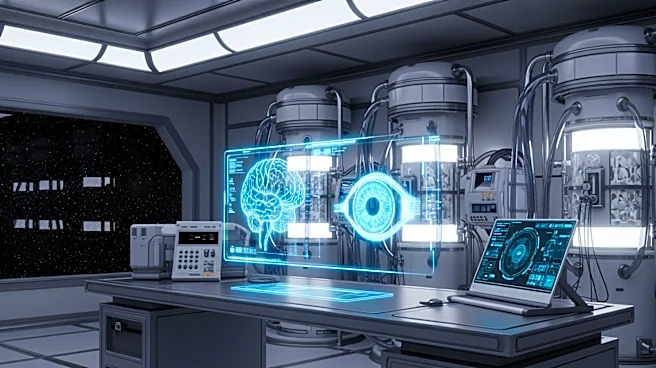
NASA astronauts aboard the International Space Station (ISS) are engaged in a series of scientific studies and technological demonstrations aimed at improving space travel and life support systems. The Expedition 74 crew, including NASA flight engineers
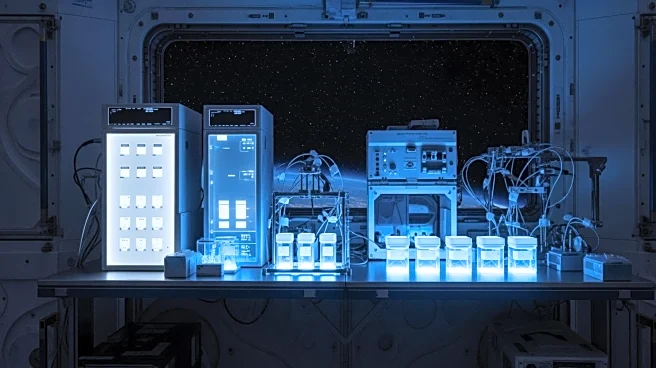
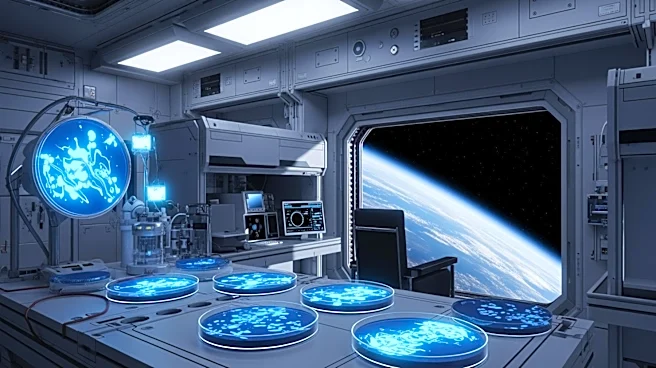
Jack Hathaway and Chris Williams, are investigating how the brain processes balance and orientation in microgravity. This involves using specialized goggles and high-speed video recordings to track eye alignment and motion. Additionally, the astronauts are conducting eye exams to monitor potential vision changes due to prolonged spaceflight. NASA flight engineer Jessica Meir is demonstrating advanced hardware to remove humidity from spacecraft, a crucial component for regenerative life-support systems in long-duration missions. The crew is also testing a Metal 3D Printer, which could reduce the need for spare parts shipments on future missions to the Moon and Mars. Meanwhile, Roscosmos cosmonauts are unpacking supplies from a recent cargo resupply ship and conducting maintenance tasks.
Why It's Important?
These studies and technological advancements are critical for the future of space exploration. Understanding how the brain adapts to microgravity can help mitigate health risks for astronauts on long-term missions, ensuring their safety and mission success. The development of regenerative life-support systems is essential for sustaining human life on missions that venture far from Earth, where resupply missions are not feasible. The ability to print parts in space using a Metal 3D Printer could significantly reduce costs and logistical challenges associated with transporting spare parts. These innovations not only enhance the efficiency and safety of space missions but also have potential applications on Earth, such as improved manufacturing techniques and advanced storage systems.
What's Next?
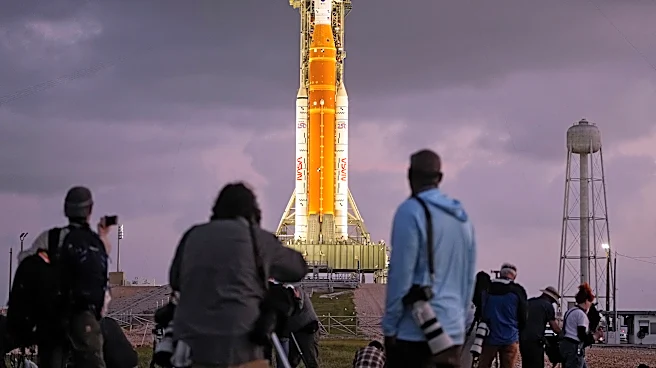
The ongoing research and technological demonstrations aboard the ISS will continue to inform future space missions, including those planned under NASA's Artemis program. As the ISS crew collects and analyzes data, scientists on Earth will use these findings to refine life-support systems and develop new technologies for space travel. The success of these experiments could pave the way for more sustainable and cost-effective missions to the Moon, Mars, and beyond. Additionally, the collaboration between NASA and international partners like ESA and Roscosmos highlights the importance of global cooperation in advancing space exploration.
Beyond the Headlines
The experiments conducted on the ISS have broader implications for understanding human physiology and developing new technologies. The insights gained from studying brain and eye functions in microgravity could lead to advancements in medical imaging and treatment for balance disorders on Earth. The humidity removal technology and Metal 3D Printer have potential applications in industries such as aerospace and manufacturing, offering more efficient and sustainable solutions. These developments underscore the interconnectedness of space exploration and terrestrial innovation, driving progress in both domains.