
What's Happening?
Demonstrations have erupted across several major U.S. cities, including Dallas, New York, Boston, and outside the White House, in response to U.S. military actions. These protests are occurring simultaneously
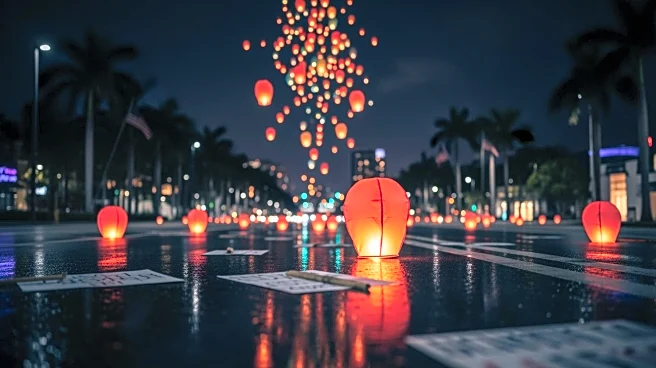
with large gatherings of Venezuelan migrants in South Florida, who are celebrating the downfall of President Maduro. The celebrations in South Florida are marked by music and cultural displays, highlighting the migrants' joy over the political changes in Venezuela. The contrast between the protests and celebrations underscores differing perspectives on U.S. foreign policy and its impact on international communities.
Why It's Important?
The nationwide protests reflect significant public dissent regarding U.S. military actions, indicating a potential shift in public opinion on foreign policy. This dissent could influence future policy decisions and political discourse, especially as the U.S. navigates its role in international conflicts. Meanwhile, the celebrations by Venezuelan migrants in South Florida highlight the impact of U.S. foreign policy on diaspora communities, showcasing their relief and hope for change in their home country. These events may affect U.S.-Venezuela relations and immigration policies, as the U.S. continues to address the complexities of international diplomacy and domestic public sentiment.
What's Next?
The ongoing protests may prompt responses from political leaders and policymakers, potentially leading to discussions on the U.S.'s military involvement abroad. There could be calls for policy reviews or changes to address public concerns. Additionally, the celebrations by Venezuelan migrants may lead to increased advocacy for U.S. support in Venezuela's political transition, influencing future diplomatic strategies. Stakeholders, including civil society groups and immigrant communities, may engage in dialogue to shape the narrative around U.S. foreign policy and its domestic implications.
Beyond the Headlines
The events highlight the cultural and emotional ties between diaspora communities and their countries of origin, emphasizing the role of cultural identity in shaping political perspectives. The contrasting reactions to U.S. military actions and Venezuelan political changes may also spark broader discussions on the ethical dimensions of foreign intervention and its impact on global communities. These developments could lead to long-term shifts in how the U.S. approaches international relations and supports democratic movements abroad.