








What's Happening?
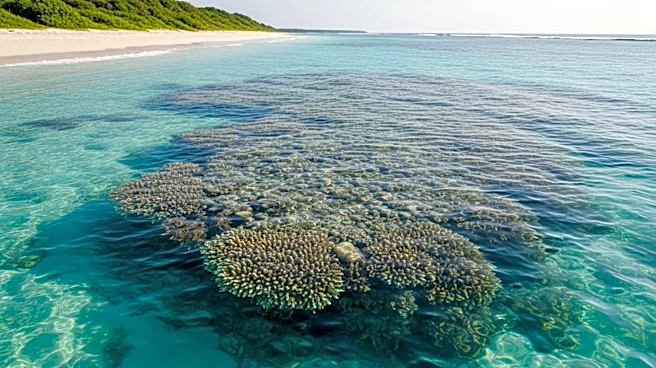
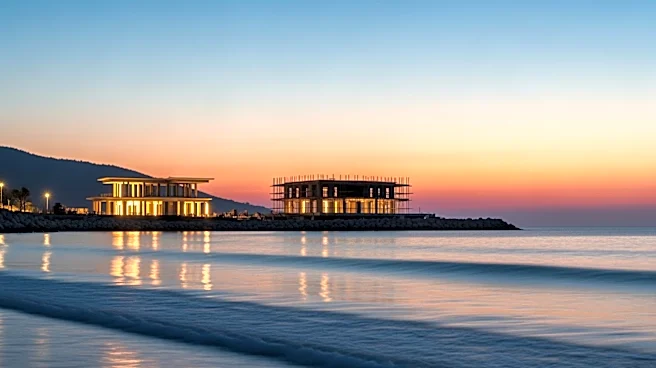
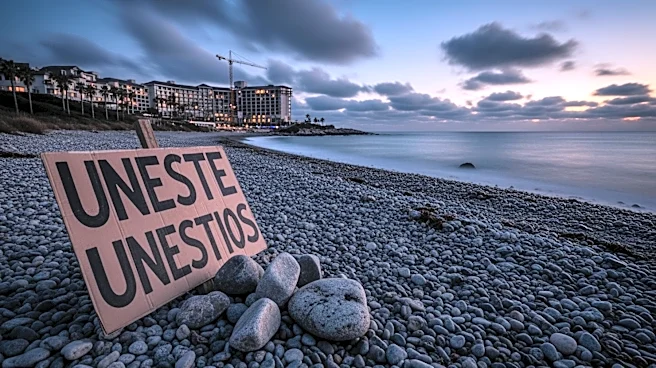
Ivanka Trump and Jared Kushner are developing a $1.4 billion resort on Sazan Island, Albania, a site previously used as a military base. The project has sparked significant protests from Albanians who are concerned about the environmental impact and cultural
implications of the development. The resort, which promises to bring jobs and tourism, is seen by some as a threat to the island's fragile ecosystem and historical legacy. The protests highlight a broader tension between foreign investment and local heritage, as many Albanians fear that the development could erase important aspects of their national identity.
Why It's Important?
The development of the resort on Sazan Island is significant as it underscores the complex dynamics of foreign investment in Albania. While the project promises economic benefits such as job creation and increased tourism, it also raises concerns about environmental degradation and cultural erasure. The protests reflect a broader debate about the type of investment that is most beneficial for Albania, a country still recovering from the economic scars of its communist past. The situation highlights the challenges faced by countries like Albania in balancing economic development with the preservation of cultural and environmental heritage.
What's Next?
The protests against the resort development are likely to continue as stakeholders debate the project's impact. The Albanian government and developers may need to engage with local communities to address their concerns and find a compromise that respects both economic and cultural interests. The outcome of this situation could set a precedent for how Albania handles future foreign investments, particularly in areas with significant historical and environmental value.
Beyond the Headlines
The controversy surrounding the Sazan Island resort highlights deeper issues of national identity and sovereignty. For many Albanians, the project represents a continuation of historical patterns where foreign powers have shaped the country's destiny. The development raises questions about who benefits from Albania's natural resources and whether local communities will have a say in their country's future. This situation also reflects broader global trends where developing nations grapple with the impacts of globalization and foreign investment on their cultural landscapes.