



What's Happening?
Scientists have identified the location of more than half of the universe's 'missing' ordinary matter, which was previously undetectable by telescopes. This matter, composed of baryons (protons and neutrons), is spread out in diffuse clouds far beyond
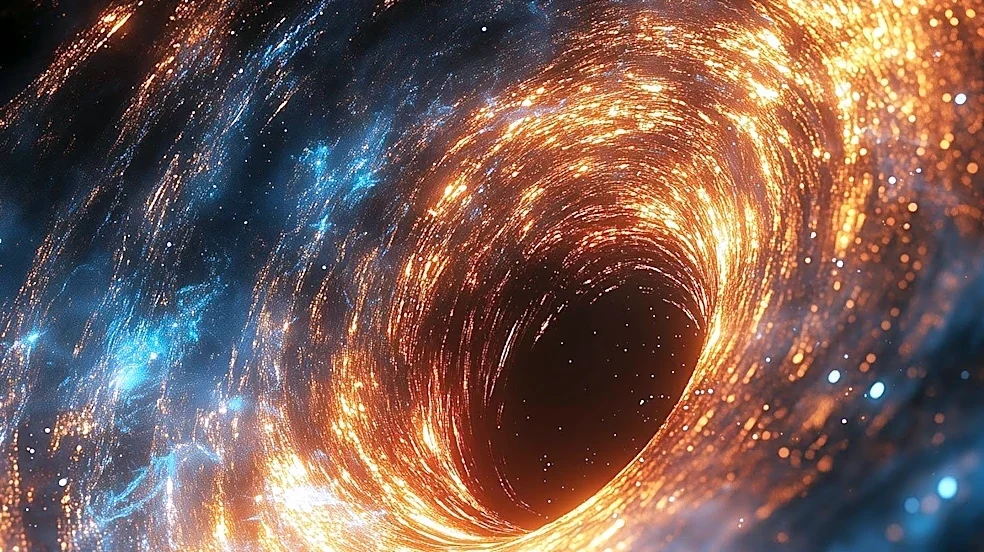
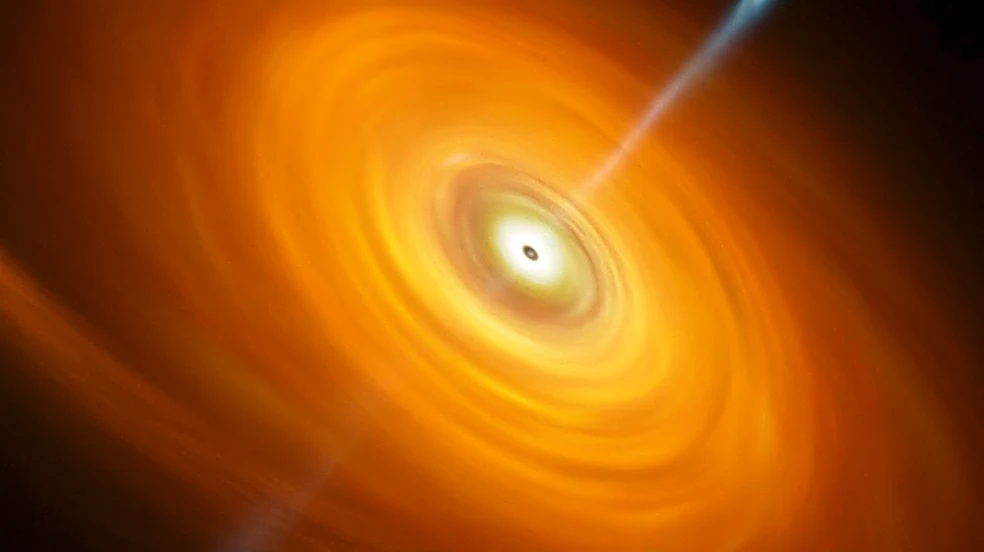
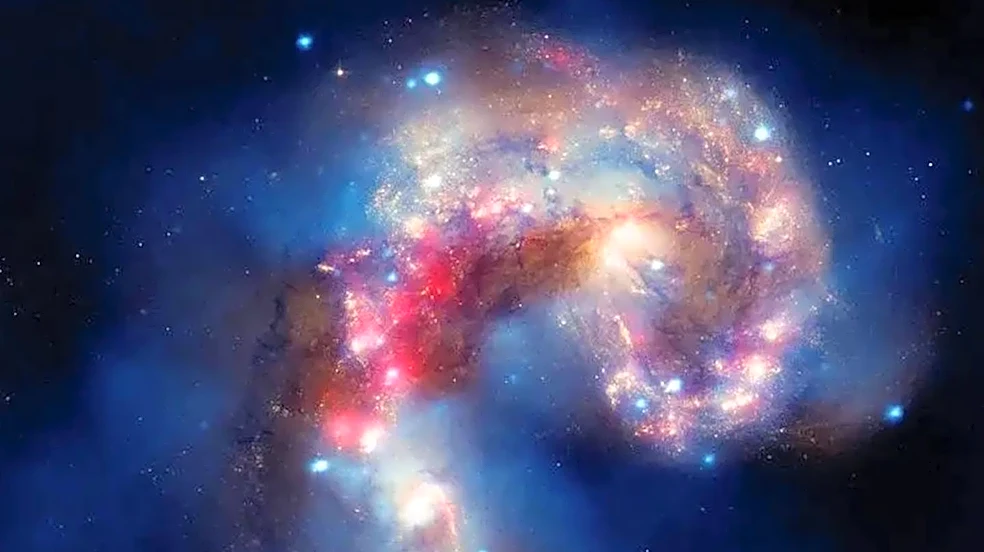
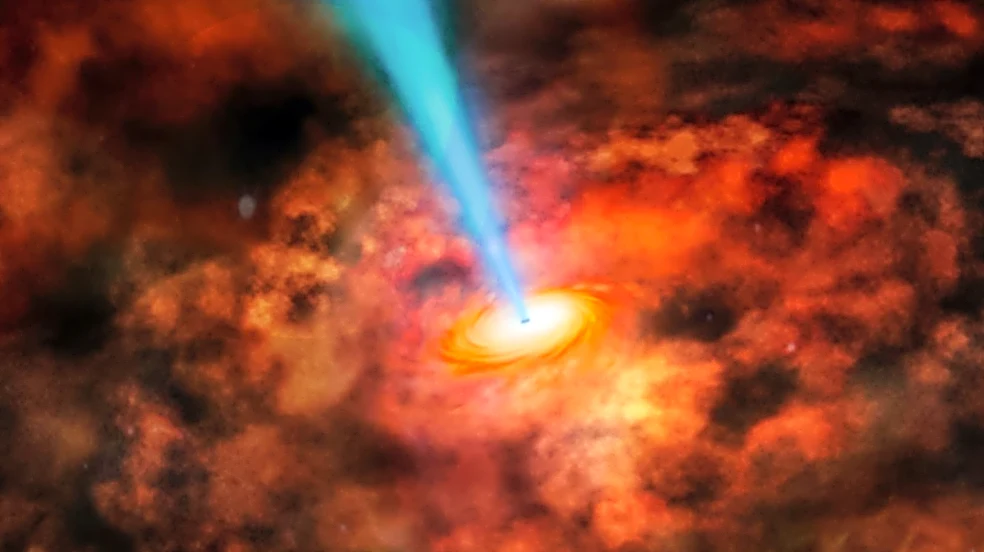
the edges of galaxies. Haochen Wang, a PhD student in astrophysics at the Massachusetts Institute of Technology, led a new study that utilized fast radio bursts (FRBs) to detect this elusive matter. As FRBs travel through space, the gas in these clouds stretches their radio waves, allowing scientists to measure the amount of matter present. The findings, published in Physical Review Letters, indicate that these gas clouds extend approximately 4 million light-years from a galaxy's edge, a much greater distance than earlier computer models had predicted. This discovery suggests that powerful galactic forces, such as jets from black holes or supernova explosions, are pushing gas much further out than previously thought.
Why It's Important?
This discovery is crucial for understanding the fundamental composition and evolution of the universe. Knowing the distribution of ordinary matter is essential for astronomers to accurately map how galaxies form, evolve, and interact with their environments. Furthermore, these matter maps are vital in the ongoing search for other unknown phenomena, such as dark energy and dark matter, which are believed to constitute the majority of the universe. If the map of 'normal' matter is inaccurate, it significantly complicates the resolution of these larger cosmic puzzles. The ability to directly detect and map this diffuse matter without relying solely on computer models marks a significant advancement in astrophysics, providing a more complete picture of the universe's structure and dynamics.
What's Next?
The new methodology, which uses FRBs to probe matter distribution, is expected to revolutionize how astronomers study the universe. Victoria Kaspi, a physicist at McGill University and co-author of the study, believes this approach is 'amazingly effective.' The development of new radio telescopes capable of pinpointing FRBs with greater precision is anticipated to boost the number of recorded FRBs by 100 times or more in the coming years. This increase in data will enable researchers, including Vikram Ravi's team at the California Institute of Technology, to create even sharper maps of cosmic gas. As more FRBs are discovered and analyzed, scientists expect to gain more accurate answers regarding the missing matter and the powerful galactic forces that shape its distribution, leading to a more refined understanding of cosmic phenomena.
Beyond the Headlines
The identification of this missing ordinary matter has profound implications beyond simply filling a gap in astronomical observations. It challenges existing theoretical models of galaxy formation and the forces at play within galactic systems. The revelation that gas is propelled much further from galaxies than previously modeled suggests a more dynamic and energetic intergalactic medium. This could lead to a re-evaluation of how energy is transferred and distributed across vast cosmic distances. Moreover, the innovative use of fast radio bursts as cosmic probes opens up new avenues for research, potentially uncovering other hidden aspects of the universe. This scientific breakthrough underscores the continuous evolution of our understanding of the cosmos and highlights the power of novel observational techniques in pushing the boundaries of knowledge.