






What's Happening?
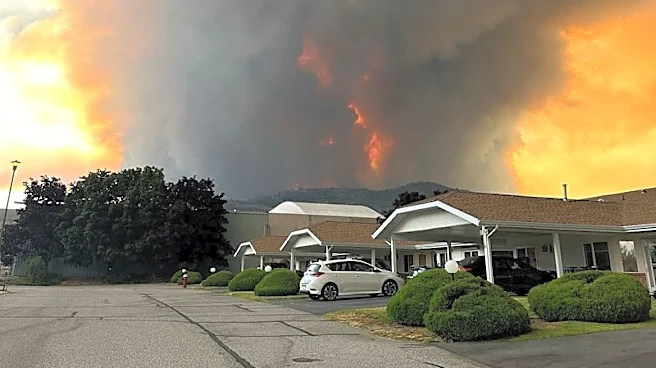
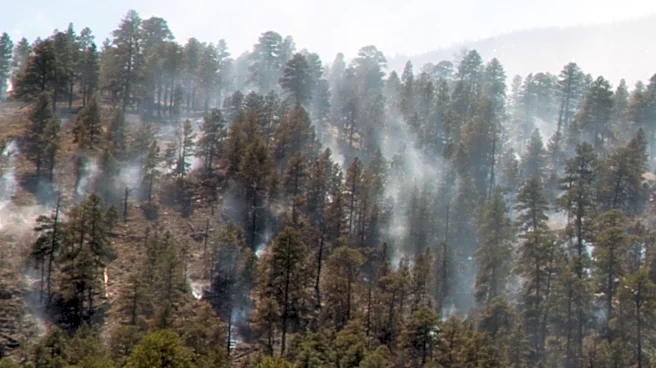
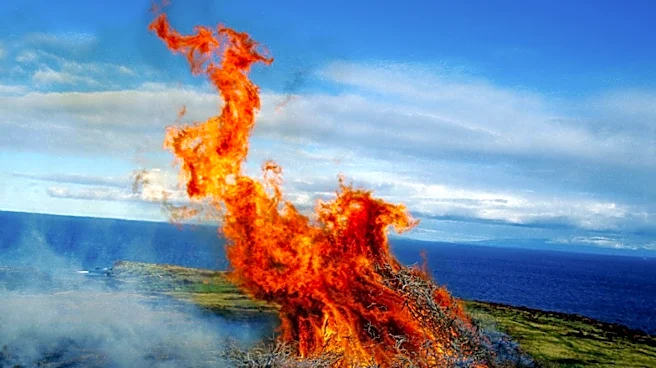
A fast-moving wildfire in British Columbia has led to a state of emergency being declared, as the blaze nearly doubled in size overnight. The Bald Range wildfire, burning out of control, has forced thousands of residents to evacuate their homes in the western
Canadian province. The fire has expanded to about 9,500 hectares, prompting evacuation orders in several communities. The state of emergency grants the provincial government special powers to manage the crisis, including imposing travel restrictions and coordinating emergency operations. The wildfire has resulted in the largest evacuation event of the summer in British Columbia.
Why It's Important?
The wildfire in British Columbia highlights the increasing frequency and intensity of wildfires in the region, exacerbated by hot and dry conditions. The state of emergency and mass evacuations underscore the urgent need for effective disaster management and response strategies. The situation poses significant challenges for local communities, affecting residents' safety and livelihoods. The wildfire also has broader implications for environmental management and climate change adaptation, as regions across Canada and beyond face similar threats.
What's Next?
Efforts to contain the wildfire will continue, with firefighters from Canada and international partners working to manage the blaze. The provincial government will focus on supporting affected communities and coordinating relief efforts. In the long term, there may be increased emphasis on developing strategies to mitigate wildfire risks and enhance resilience to climate-related disasters. Policymakers and environmental agencies will likely explore measures to address the underlying causes of wildfires and improve preparedness for future events.