





What's Happening?
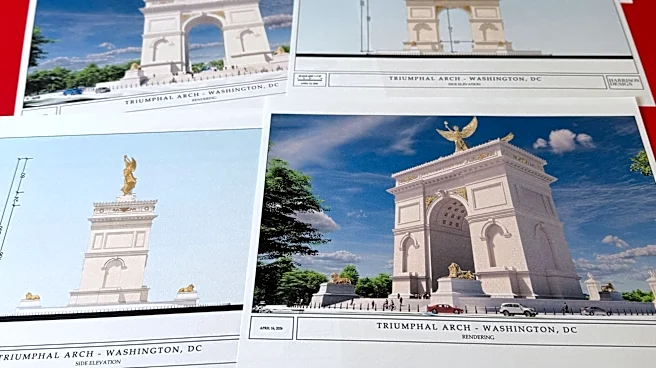
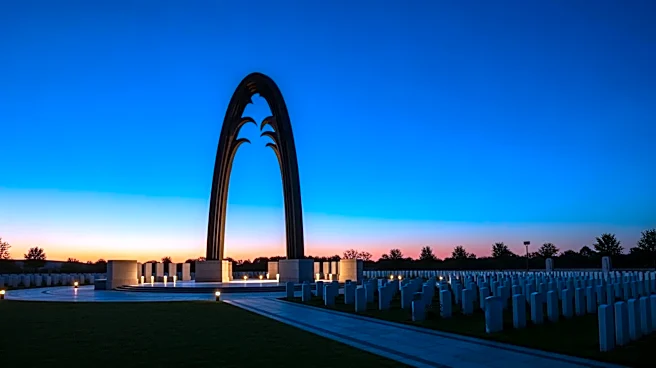
A group of Vietnam War veterans, along with an architectural historian, have filed a lawsuit against President Donald Trump regarding a proposed 250-foot 'Triumphal Arch' near the entrance of Arlington National Cemetery. The plaintiffs argue that the project,
which aims to commemorate the upcoming 250th anniversary of American independence, lacks the necessary congressional approval, thus violating federal law. The design of the arch, inspired by Paris' Arc de Triomphe, would be the largest of its kind in the world, potentially overshadowing nearby landmarks such as the Lincoln Memorial. The veterans involved in the lawsuit express that the monument would be disrespectful to those buried at Arlington, given their personal ties to the cemetery. Despite the controversy, supporters, including the White House, assert that the monument is intended to celebrate the nation's history.
Why It's Important?
The lawsuit highlights the ongoing debate over the balance between honoring national history and respecting the sanctity of memorial sites. The proposed monument's significant size and location have raised concerns about its impact on the landscape and the potential overshadowing of existing memorials. This case underscores the importance of legal oversight in presidential actions, particularly when they involve national landmarks and historical sites. The outcome of this lawsuit could set a precedent for how future projects of national significance are approved and executed, potentially affecting how historical commemorations are approached in the U.S.
What's Next?
The proposal for the Triumphal Arch requires approval from multiple federal agencies, including the National Capital Planning Commission, before construction can proceed. The lawsuit may delay or alter the project's trajectory, depending on the court's decision. The case could prompt further scrutiny of presidential authority in similar projects, potentially leading to legislative changes or increased oversight. Stakeholders, including veterans' groups and historical preservationists, are likely to continue voicing their opinions, influencing public perception and policy decisions.