






What's Happening?
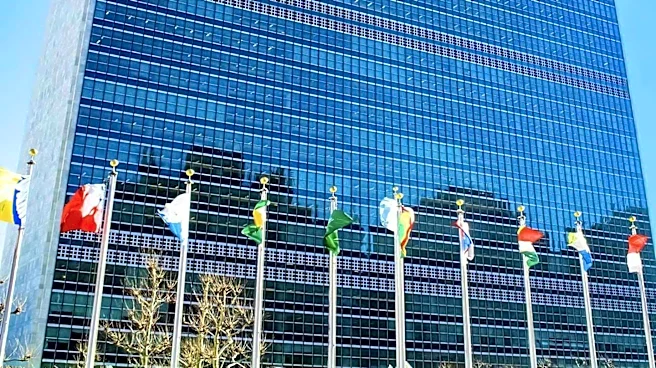
U.S. Representative Harriet Hageman has advocated for the U.S. government to cease funding United Nations agencies that are led by officials with ties to the Chinese Communist Party (CCP). In a recent interview with NTD, Representative Hageman asserted
that the CCP has strategically placed its members in leadership positions within various UN organizations over several years. She contends that these individuals operate these agencies not for the benefit or objectives of the UN, but rather to serve the interests of the CCP. Representative Hageman is actively promoting legislative measures in the U.S. Congress to adjust funding mechanisms for UN agencies, specifically targeting those influenced by the CCP. She emphasized that no U.S. funds should be provided to UN agencies where officials with close ties to the CCP are in charge. Furthermore, she stated that leadership roles within UN agencies should be filled by individuals who align with U.S. values, such as freedom, human rights, and individual autonomy, and that American citizens should be actively supported to assume these positions.
Why It's Important?
This initiative by Representative Hageman highlights growing concerns within the U.S. political landscape regarding the influence of the Chinese Communist Party on international organizations. The potential cessation of U.S. funding to UN agencies could significantly impact their operations and effectiveness, particularly if a substantial portion of their budget relies on American contributions. This move could also set a precedent for other nations to re-evaluate their financial support for international bodies perceived to be under undue influence from specific state actors. For the U.S., it underscores a strategic shift towards safeguarding its interests and values on the global stage, potentially leading to a more stringent vetting process for international appointments and a re-assessment of multilateral engagements. The debate also touches upon the broader implications of 'birth tourism' and the acquisition of U.S. citizenship, which Representative Hageman views as a 'policy abuse' that needs to be addressed to prevent foreign entities from exploiting U.S. policies.
What's Next?
Representative Hageman is actively pushing for legislative solutions in the U.S. Congress to address the issue of CCP influence within UN agencies. This includes exploring options to halt U.S. funding to any UN agency led by individuals with close ties to the CCP. The proposed measures aim to ensure that UN leadership positions are occupied by individuals who share the values of the U.S. and its allies. Additionally, there will likely be continued scrutiny and debate within Congress regarding the 'birth tourism' issue, with calls for policy changes to prevent what is perceived as an abuse of U.S. citizenship laws. The U.S. government may also increase its efforts to promote American citizens for leadership roles within international organizations to counter the influence of adversarial nations. The outcome of these legislative efforts will determine the future of U.S. engagement and funding for various UN bodies and could lead to a broader re-evaluation of international cooperation frameworks.
Beyond the Headlines
The concerns raised by Representative Hageman extend beyond immediate funding decisions, touching upon fundamental questions of sovereignty, international governance, and the integrity of multilateral institutions. The assertion that the CCP is strategically infiltrating UN agencies suggests a long-term geopolitical strategy aimed at shaping global norms and policies to its advantage. This raises ethical questions about the impartiality and effectiveness of international bodies when their leadership may be beholden to national interests rather than universal principles. Furthermore, the discussion around 'birth tourism' highlights a complex legal and ethical dilemma concerning citizenship, national security, and the potential for exploitation of immigration policies. The broader implication is a potential shift in the U.S. approach to international relations, moving towards a more assertive stance in challenging perceived foreign influence and prioritizing national interests within global frameworks. This could lead to a redefinition of what constitutes effective and trustworthy international cooperation in an increasingly multipolar world.