








What's Happening?
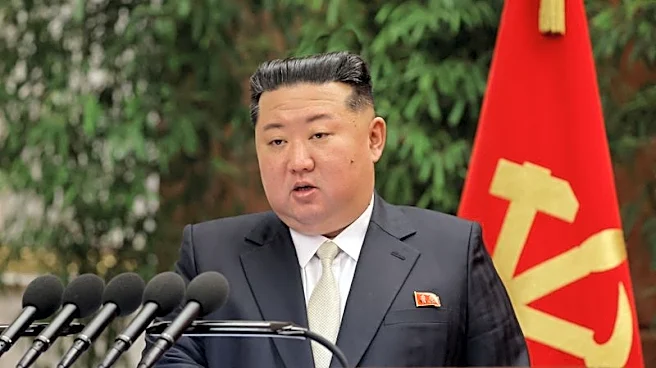
North Korea, a close ally of Russia, has reportedly amassed enough nuclear warheads and delivery systems to potentially breach US missile defense systems. This development follows a new defense treaty signed between North Korea and Russia, which includes
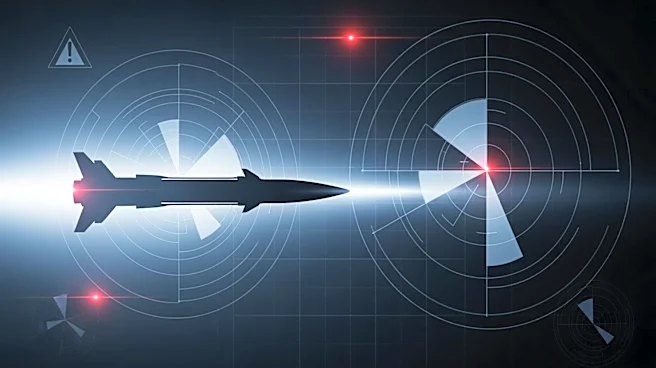
Russian support for North Korea's missile program. North Korea is capable of producing enough fissile material annually to build up to 20 nuclear warheads, indicating a rapid expansion of its arsenal. The country's intercontinental ballistic missiles (ICBMs), such as the Hwasong-15 and Hwasong-17, are considered capable of penetrating US defenses. This marks a significant escalation in North Korea's military capabilities, with implications for regional and global security.
Why It's Important?
The expansion of North Korea's nuclear capabilities represents a significant shift in the global security landscape, particularly for the United States and its allies. The potential for North Korea to breach US missile defenses raises concerns about the effectiveness of current defense systems and the need for strategic adjustments. This development could lead to increased tensions in the Asia-Pacific region and necessitate a reevaluation of US defense strategies. Additionally, the strengthening of ties between North Korea and Russia could complicate diplomatic efforts to address nuclear proliferation and regional stability.
What's Next?
In response to North Korea's growing capabilities, the US and its allies may need to enhance their missile defense systems and reconsider their strategic posture in the region. Diplomatic efforts to engage North Korea in denuclearization talks could become more urgent, though complicated by its alliance with Russia. The international community will likely monitor North Korea's actions closely, with potential implications for sanctions and diplomatic relations. The situation may also prompt discussions on arms control and non-proliferation efforts at a global level.