





What's Happening?
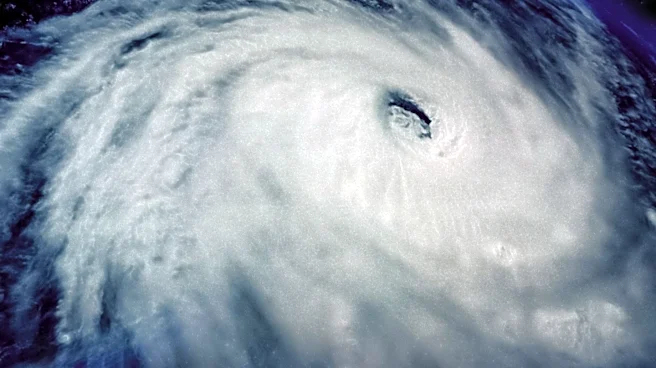
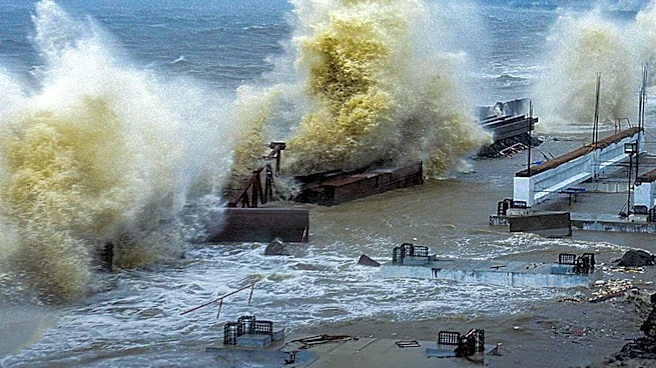
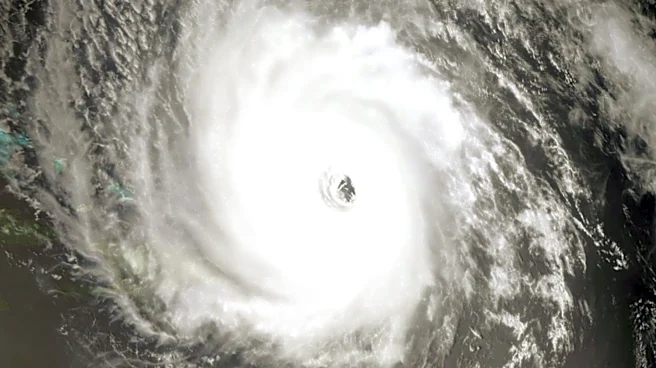
Typhoon Dolphin has struck eastern China, causing severe flooding and prompting the evacuation of over a million residents. The storm made landfall in Zhejiang province with winds reaching 151 km/h, leading to significant disruptions in cities like Shanghai,
where nearly 313mm of rain fell in 24 hours. The typhoon has also affected transportation, with numerous flights canceled and public transport services disrupted. As Dolphin weakens into a tropical storm, it continues to bring heavy rain to central and eastern provinces, raising concerns about further flooding and landslides.
Why It's Important?
The extensive evacuations and infrastructure disruptions caused by Typhoon Dolphin highlight the challenges faced by densely populated regions in managing extreme weather events. The economic impact is considerable, with transportation and business activities severely affected. This situation underscores the need for improved disaster preparedness and resilient infrastructure to withstand such natural disasters. Additionally, the storm's intensity and rapid development are indicative of broader climate change trends, emphasizing the urgency of addressing global warming and its effects on weather patterns.
What's Next?
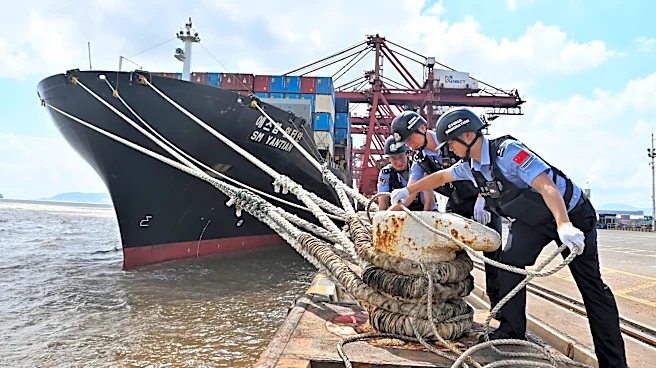
As the storm moves northward, authorities are maintaining high alert levels and continuing evacuation efforts in vulnerable areas. The Chinese government is likely to focus on recovery and rebuilding efforts, as well as enhancing early warning systems and infrastructure resilience. The situation may also lead to increased international collaboration on climate change mitigation and adaptation strategies, as countries recognize the shared threat posed by extreme weather events.