




What's Happening?
A recent assessment by the IUCN Red List of Ecosystems (RLE) indicates that nearly all shallow-water coral reef ecosystems globally are at a high risk of ecological collapse by 2075. The report, which involved over 250 experts assessing reefs across 127
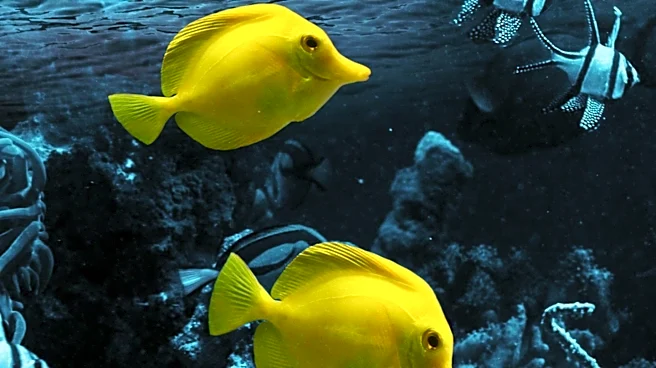
tropical and subtropical ecoregions, found that 24% of coral reefs are already critically endangered. When projected heat stress from climate change is factored in, this figure rises to 96% becoming critically endangered within the next 50 years. Heat stress is identified as the primary driver of coral reef decline, causing coral bleaching where corals expel symbiotic algae, leading to weakening, disease vulnerability, and eventual death. One ecosystem, the Western Galapagos Islands, has already collapsed. Coral reefs, despite covering less than 1% of the ocean floor, support approximately 25% of marine life.
Why It's Important?
The potential collapse of coral reefs carries significant global implications, impacting marine biodiversity, coastal communities, and economies. Coral reefs are vital habitats for a quarter of all marine species, meaning their degradation would lead to widespread loss of marine life. This loss would, in turn, affect food security for populations reliant on fish and other marine resources. Coastal communities worldwide depend on reefs for protection against storms and erosion, as well as for livelihoods through tourism and fishing. The economic value derived from these ecosystems is substantial, and their decline would result in considerable financial losses. The assessment underscores the urgent need for global action to reduce greenhouse gas emissions, as this is identified as the most significant lever to prevent complete ecological collapse.
What's Next?
To avert the complete ecological collapse of coral reefs, immediate and substantial action on climate change is required, primarily through cutting emissions. Beyond emissions reductions, efforts to improve overall coral health are crucial to enhance their recovery capabilities after heat waves. This includes reducing pollution in coral reefs, protecting existing coral populations, and promoting sustainably caught seafood. According to Marcos Valderrábano, programme manager for the RLE at IUCN, if climate projections hold, most corals will experience repeated severe bleaching, leading to less biodiverse ecosystems dominated by algae. Sarah Bedolfe, a senior marine scientist with Oceana, emphasizes that governments must also address overfishing and pollution to relieve pressure on reefs.
Beyond the Headlines
The impending collapse of coral reefs highlights a critical ethical and environmental challenge. The interconnectedness of marine ecosystems means that the loss of reefs could trigger cascading effects throughout the ocean, potentially altering global climate patterns and ocean chemistry. The issue also brings to light the long-term consequences of human activities, particularly industrial emissions and unsustainable fishing practices, on natural systems. The call for urgent climate action and improved reef health points to a broader shift towards recognizing the intrinsic value of ecosystems and the necessity of integrating environmental protection into economic and political decision-making. The potential for a less biodiverse ocean, where algae replace corals, represents a fundamental alteration of marine life as we know it.