









What's Happening?
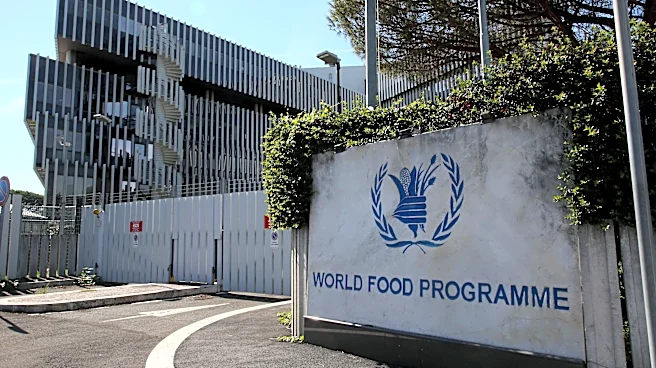
The World Food Programme (WFP) is actively working to combat acute food insecurity affecting 266 million people across 47 countries and territories globally. The organization emphasizes that while there is enough food in the world, access, affordability,
nutrition, and resilience remain significant challenges. WFP identifies conflict as the primary driver of the hunger crisis, displacing populations, disrupting markets, and inflating food prices. Climate emergencies also play a crucial role by destroying livelihoods, crops, and infrastructure. Economic inequalities further exacerbate hunger, making healthy diets unaffordable for 2.8 billion people. WFP is committed to reaching over 150 million people in urgent need and implementing programs that address the root causes of hunger, requiring adequate funding and unimpeded access to deliver essential food and nutrition.
Why It's Important?
The WFP's efforts are critical in addressing a global humanitarian crisis where millions face acute food insecurity. By highlighting that hunger is not a supply issue but one of access and affordability, the WFP underscores the complex interplay of geopolitical, environmental, and economic factors. The emphasis on conflict and climate change as primary drivers points to the urgent need for international cooperation on peacebuilding and climate action, alongside humanitarian aid. The staggering number of people unable to afford a healthy diet reveals deep-seated economic inequalities that require systemic solutions. WFP's work is vital for immediate relief and for advocating for long-term strategies that build resilience and tackle the underlying causes of hunger, impacting global stability and human development.
What's Next?
The WFP will continue its operations to reach over 150 million people in urgent need, focusing on delivering food assistance, nutrition, safe water, and livelihood support. The organization will likely intensify its advocacy for increased funding and unimpeded access to affected populations, which are crucial for effective humanitarian responses. WFP will also continue to implement programs that address the root causes of hunger, including initiatives aimed at mitigating the impacts of conflict and climate change. International cooperation and political will are essential for the WFP to achieve its goals, and ongoing efforts will involve engaging with governments and other humanitarian partners to ensure sustained support and effective coordination of aid.
Beyond the Headlines
The WFP's analysis of global food insecurity reveals a profound ethical and moral challenge: the existence of widespread hunger despite sufficient global food production. This paradox highlights the failures in distribution, governance, and economic systems. The interconnectedness of conflict, climate change, and economic inequality as drivers of hunger suggests that addressing food insecurity requires a holistic approach that transcends traditional humanitarian aid. It necessitates diplomatic efforts to resolve conflicts, robust climate adaptation and mitigation strategies, and policies aimed at reducing economic disparities. The WFP's work, therefore, is not just about feeding the hungry but also about advocating for a more just and sustainable global system that ensures food security for all, challenging the international community to confront these complex, systemic issues.