






What's Happening?
The Israeli military has for the first time acknowledged firing on the vehicle carrying 5-year-old Hind Rajab in Gaza and has opened a criminal investigation into her killing. This admission comes after the Israel Defense Forces (IDF) had previously denied
involvement in the January 2024 incident, stating that a preliminary investigation found its forces were not present near or within firing range of the vehicle. Rajab was one of seven family members in the vehicle who came under Israeli fire. She survived the initial attack and made a desperate phone call to Palestinian paramedics for rescue. An ambulance dispatched to save her also came under fire, and her body was found 12 days later in a bullet-riddled car. The IDF statement indicated that "findings of the examination indicate that IDF troops fired at a vehicle that was approaching them." The military has also launched a criminal investigation into the March 2025 killing of 15 paramedics and first responders, acknowledging that the firing in that incident raises a "reasonable suspicion of criminal misconduct." However, the military determined there was no reasonable suspicion of criminal conduct to justify criminal investigations into three other incidents, including the April 2024 killing of seven World Central Kitchen (WCK) aid workers.
Why It's Important?
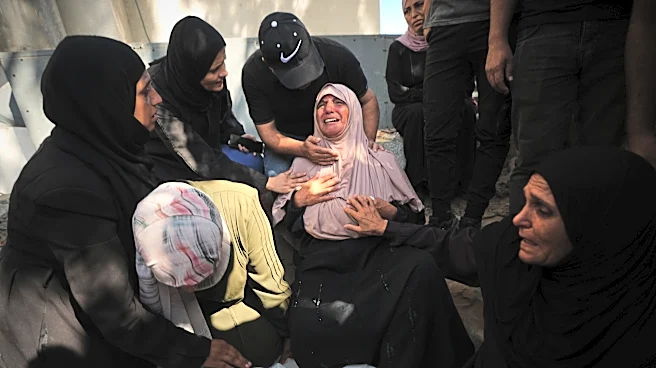
This development is significant as it marks a rare admission by the Israeli military of direct involvement in civilian casualties and the initiation of criminal probes into specific incidents. The case of Hind Rajab garnered international attention due to recordings of her desperate call for help, making it a symbol of the conflict's impact on children. The decision to open criminal investigations, particularly after initial denials, could be seen as a response to mounting international pressure for accountability. However, the selective nature of these investigations, with other high-profile incidents involving aid worker deaths not leading to criminal probes, raises questions about the scope and impartiality of the military's internal review process. The Palestinian Ambassador to the UN, Riyad Mansour, has expressed skepticism, stating that past Israeli investigations have not been independent or credible. The outcome of these investigations could influence international perceptions of Israel's adherence to the laws of armed conflict and its commitment to civilian protection, potentially affecting diplomatic relations and calls for external oversight.
What's Next?
The criminal investigations into the deaths of Hind Rajab and the 15 paramedics will proceed, with the Military Police Criminal Investigation Division leading the inquiries. The Hind Rajab Foundation has expressed concerns that such investigations often conclude without meaningful prosecution or punishment, suggesting that the international community will closely monitor the process and its outcomes. The Israeli military's advocate-general will continue to review other incidents from the conflict, with decisions on further criminal investigations pending. International bodies and human rights organizations are likely to maintain pressure on Israel for transparent and thorough accountability for all alleged misconduct. The UK and Australia have already expressed strong objections to the decision not to pursue criminal proceedings in the World Central Kitchen attack, indicating potential diplomatic repercussions and continued calls for justice from allied nations. The findings and subsequent actions taken by the Israeli military will be crucial in shaping future international responses and discussions regarding the conflict.
Beyond the Headlines
The Israeli military's decision to open criminal investigations, while a step towards accountability, also highlights the complex and often contentious nature of wartime misconduct probes. The distinction between "tragic error" and "criminal conduct" is a critical legal and ethical challenge in such conflicts, particularly when operations occur in dense urban environments. The timing of these investigations, months after the incidents, raises questions about the promptness of internal reviews and the potential for evidence degradation or memory fading. The international community's varying reactions to these investigations underscore the deep divisions and differing expectations regarding accountability in the Israel-Hamas conflict. The ongoing debate over the credibility of internal military investigations versus the need for independent international oversight will likely intensify. This situation also brings to the forefront the broader implications for international humanitarian law and the protection of civilians and aid workers in conflict zones, setting precedents for how nations are held accountable for actions during wartime.