





What's Happening?
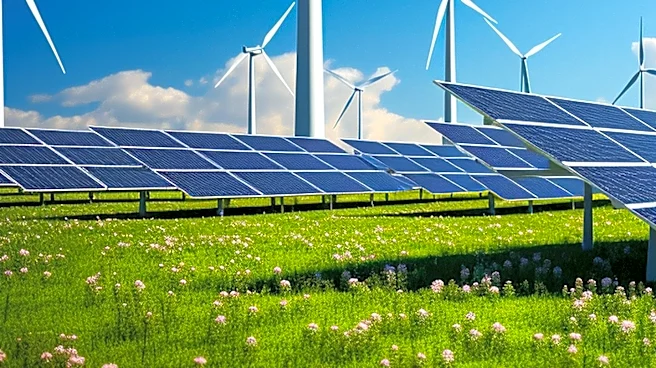
New York state regulators are currently evaluating proposals from utilities, including Con Edison, National Grid, and Avangrid-owned Rochester Gas and Electric and New York State Electric and Gas, to allow them to own and operate solar and wind farms.
This move comes decades after the state mandated utilities to divest from power plant ownership in the 1990s to foster competition. The utilities argue that independent power companies have not met state clean energy targets due to financial pressures and supply chain issues. They contend that utility-owned generation is essential to reliably and affordably meet New York's increasing energy demands and achieve its ambitious climate goals. The Public Service Commission is considering this change as part of its broader strategy to boost clean and renewable energy generation within the state.
Why It's Important?
This discussion is critical for New York's energy future and its commitment to climate change mitigation. If approved, allowing utilities to own generation assets could significantly alter the state's energy market structure, potentially accelerating the deployment of renewable energy projects. Proponents argue it would introduce greater oversight, address growing energy needs, and lead to more renewable energy and potentially lower prices for consumers. However, critics, including independent power producers, express concerns that this change could stifle competition, increase costs for New Yorkers, and lead to project delays. The debate highlights a fundamental tension between market-driven energy development and a more centralized, utility-led approach to achieving clean energy targets. The outcome could set a precedent for other states, as similar pushes by utilities are occurring in Pennsylvania, Ohio, New Jersey, and Illinois.
What's Next?
The Public Service Commission has not set a timeline for its decision on whether to permit utilities to own power generation facilities. In anticipation of a potential change, the Independent Power Producers of New York have launched a six-figure campaign to oppose the proposal, arguing it would be detrimental to the state's energy market and consumers. Utilities maintain they possess the necessary resources and expertise to build and operate renewable energy facilities, while independent producers question this claim. The decision will likely involve a careful balancing act between the state's clean energy mandates, market competition, and consumer costs. Stakeholders will continue to present their arguments, and the commission's ruling will have long-lasting implications for New York's energy landscape and its ability to meet its climate objectives.
Beyond the Headlines
The debate over utility ownership of renewable energy assets touches upon deeper questions about market design, risk allocation, and public interest in the energy sector. When utilities build projects, the financial risks are often borne by the public through rate increases, a point raised by experts like Ari Peskoe from Harvard Law School. This contrasts with independent power producers who typically bear more of the project risk. The outcome could influence the pace and cost of New York's energy transition, potentially impacting the state's economic competitiveness and environmental sustainability. Furthermore, the discussion highlights the complex interplay between regulatory frameworks, technological advancements, and the evolving roles of different actors in the clean energy ecosystem. The decision will reflect the state's philosophy on how best to achieve its ambitious climate goals while ensuring grid reliability and affordability.