







What's Happening?
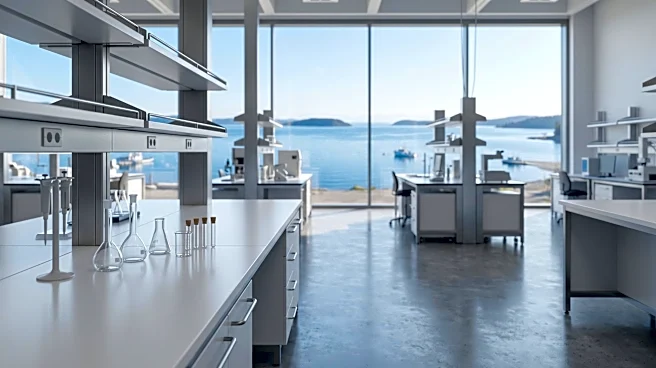
Chesapeake Bay Hall, a new facility at William & Mary’s Virginia Institute of Marine Science & Batten School of Coastal and Marine Sciences (VIMS & Batten School) in Gloucester Point, VA, is providing valuable insights into effective laboratory design.
Several months into its occupancy, feedback from researchers and staff indicates that the building is successfully addressing long-standing challenges and improving research operations and the occupant experience. The design, a collaboration between Baskervill and Page, with construction by Kjellstrom and Lee and engineering by RMF Engineering, emphasizes flexibility, collaboration, and a strong connection to the York River and Chesapeake Bay through its views and materials. The post-occupancy evaluation reveals how thoughtful design can enhance environmental performance, researcher workflow, and the ability to protect scientific work, contributing to the facility's long-term value.
Why It's Important?
The experience at Chesapeake Bay Hall offers crucial lessons for institutions planning new research facilities or considering renovations of existing laboratories. It underscores that the value of a research building extends beyond initial construction costs and square footage, encompassing factors like environmental performance, workflow efficiency, and adaptability. The positive feedback on improved research operations and occupant experience suggests that investing in well-designed spaces can directly enhance scientific productivity and staff well-being. This case study provides a model for how architectural and engineering decisions can create environments that foster innovation, collaboration, and a deeper connection to the research mission, ultimately benefiting the scientific community and the broader public through advanced research outcomes.
What's Next?
The insights gained from Chesapeake Bay Hall's post-occupancy evaluation will likely influence future laboratory design projects, both within VIMS & Batten School and at other research institutions. Architects, engineers, and facility planners will draw upon these findings to prioritize flexibility, sustainability, and user experience in new constructions and renovations. The emphasis on integrating the building with its natural surroundings and creating collaborative spaces is a trend that may become more prevalent in scientific facility design. Ongoing monitoring of the building's performance and occupant satisfaction could lead to further refinements in design principles and best practices for creating high-performing research environments.
Beyond the Headlines
The success of Chesapeake Bay Hall in enhancing the occupant experience and research operations speaks to the profound impact of physical space on human endeavor. Beyond the functional aspects of a laboratory, the design's ability to connect researchers with their environment and foster collaboration highlights the psychological and social dimensions of scientific work. This approach recognizes that an inspiring and comfortable workspace can significantly boost creativity, productivity, and overall job satisfaction. The building's design also subtly reinforces the institution's mission, reminding occupants of the natural world they are studying. This holistic view of design, where aesthetics, functionality, and environmental integration converge, represents a forward-thinking approach to creating spaces that not only support but also inspire scientific discovery.