


What's Happening?
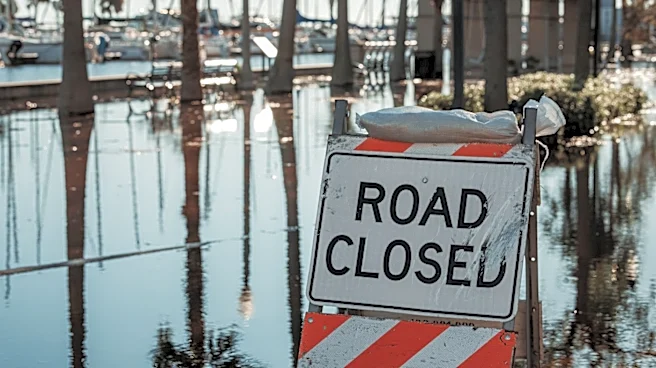
Jessica Dandridge-Smith, MA, emphasizes that climate denial is no longer an option for Louisiana, urging political leaders to take decisive action to address the escalating climate crisis. She highlights that the state's unique culture, food, and traditions
are at severe risk of being lost due to rising sea levels and increasingly frequent storms. Dandridge-Smith argues that current strategies, such as pumping water, building walls, or relying solely on grant funding, are insufficient to protect communities. She stresses the necessity of political will to implement comprehensive solutions, drawing parallels to the lessons learned from Hurricane Katrina regarding the inadequacy of reactive measures.
Why It's Important?
The call for political action on climate change in Louisiana is critically important due to the state's extreme vulnerability to environmental shifts. Louisiana's coastal regions are experiencing some of the highest rates of land loss globally, directly threatening its economy, infrastructure, and cultural heritage. The continued inaction or insufficient response from political leaders could lead to irreversible damage, displacing communities and eroding the state's unique identity. This situation underscores the broader national challenge of balancing economic interests with environmental protection, particularly in states heavily reliant on industries susceptible to climate impacts. The plea from Dandridge-Smith highlights the urgent need for proactive, long-term policy decisions to safeguard the future of the state and its residents.
What's Next?
The immediate next steps involve increased pressure on Louisiana's elected officials to acknowledge the severity of climate change and to develop and implement robust adaptation and mitigation strategies. This could include legislative efforts to fund coastal restoration projects, invest in renewable energy, and establish policies that promote sustainable land use. Public awareness campaigns and community organizing, as exemplified by Dandridge-Smith's advocacy, are likely to intensify to mobilize citizen support for climate action. The ongoing dialogue will focus on translating scientific consensus into political will, aiming to secure the necessary resources and commitment to protect Louisiana's future from the encroaching Gulf of Mexico.
Beyond the Headlines
The situation in Louisiana transcends typical environmental policy debates, touching upon profound ethical and cultural dimensions. The potential loss of unique cultural practices, such as second-lining and traditional music, due to environmental displacement, represents a significant blow to American heritage. This crisis forces a re-evaluation of the responsibilities of governance in protecting not just physical assets but also intangible cultural legacies. It also highlights the disproportionate impact of climate change on vulnerable communities, raising questions of environmental justice. The narrative from Louisiana serves as a stark warning and a case study for other coastal regions globally, emphasizing that climate change is not merely an environmental issue but a fundamental threat to human civilization and cultural identity.