







What's Happening?
SMART Technologies has launched SMART SoundLift, a wireless microphone-based voice amplification system designed for classrooms. This system amplifies a teacher's voice through the integrated speakers of compatible SMART Board interactive displays, eliminating
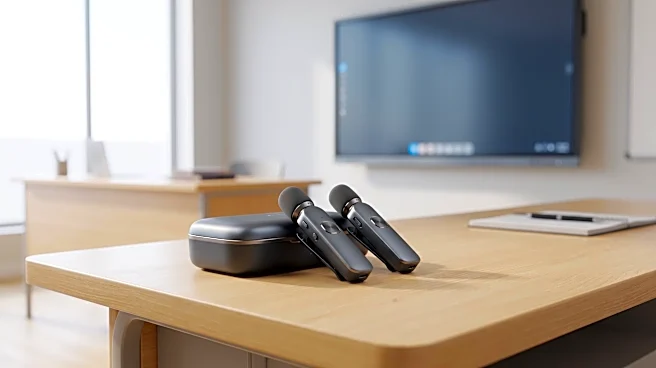
the need for additional ceiling speakers, cabling, or separate amplifiers. The SoundLift system includes two wearable microphones and a receiver, which are pre-paired out of the box. Each microphone offers five hours of use and charges in two hours, with the charging case providing an additional ten hours, totaling up to fifteen hours of use. The system is compatible with SMART's current generation of iQ 4 displays and newer models, specifically SMART Board RX(V1) and newer, and SMART Board MX(V5) and newer, requiring a recent version of the iQ system software. This solution aims to improve audibility for students and reduce vocal strain for teachers, addressing both instructional and occupational health concerns.
Why It's Important?
The introduction of SMART SoundLift is significant for the U.S. education sector, particularly in enhancing classroom accessibility and learning environments. By ensuring a teacher's voice is clearly heard by all students, regardless of their seating position or background noise, the system supports students with hearing difficulties, those learning English as an additional language, and individuals with auditory processing differences. This can lead to improved academic outcomes and a more inclusive learning experience. For teachers, the system mitigates the need to constantly project their voices, potentially reducing vocal strain and long-term occupational health issues. Furthermore, the design, which leverages existing interactive display infrastructure, offers a cost-effective solution for schools, avoiding the extensive building projects typically associated with traditional sound systems. This accessibility-focused approach allows districts to deploy the technology incrementally, starting with classrooms most in need, aligning with budget constraints and accessibility mandates.
What's Next?
Schools and educational districts across the U.S. are likely to evaluate and potentially adopt SMART SoundLift as part of their ongoing efforts to improve classroom accessibility and teacher well-being. The system's ease of deployment and management, with no per-student provisioning or complex IT administration, makes it an attractive option for quick integration into existing educational technology setups. Future developments might include broader compatibility with other interactive display brands or further enhancements to integrate with other classroom technologies, such as AI transcription and translation services, which benefit from clear audio input. The focus on accessibility and cost-effectiveness suggests a growing trend in educational technology towards solutions that maximize existing infrastructure and directly address practical classroom challenges.
Beyond the Headlines
Beyond its immediate utility, SMART SoundLift highlights a broader shift in educational technology towards inclusive design and teacher support. The emphasis on making speech intelligible for all students underscores a commitment to equitable learning opportunities, recognizing that a clear audio signal is fundamental to comprehension. The system's ability to allow teachers to write on the display while being amplified, without feedback, addresses a common pedagogical practice and removes a barrier to effective instruction. Moreover, the inclusion of a second microphone for student interaction fosters a more dynamic and participatory learning environment, empowering quieter students to contribute and be heard. This technological advancement reflects an evolving understanding of classroom dynamics, where technology is not just about content delivery but also about facilitating effective communication and fostering an inclusive community.