





What's Happening?
Researchers studying seamounts on the Nazca Ridge have identified a novel species of giant bubblegum coral, named *Paragorgia quitinosa*, which lacks a rigid skeletal axis. This deep-water octocoral, belonging to a genus known for massive, multi-meter
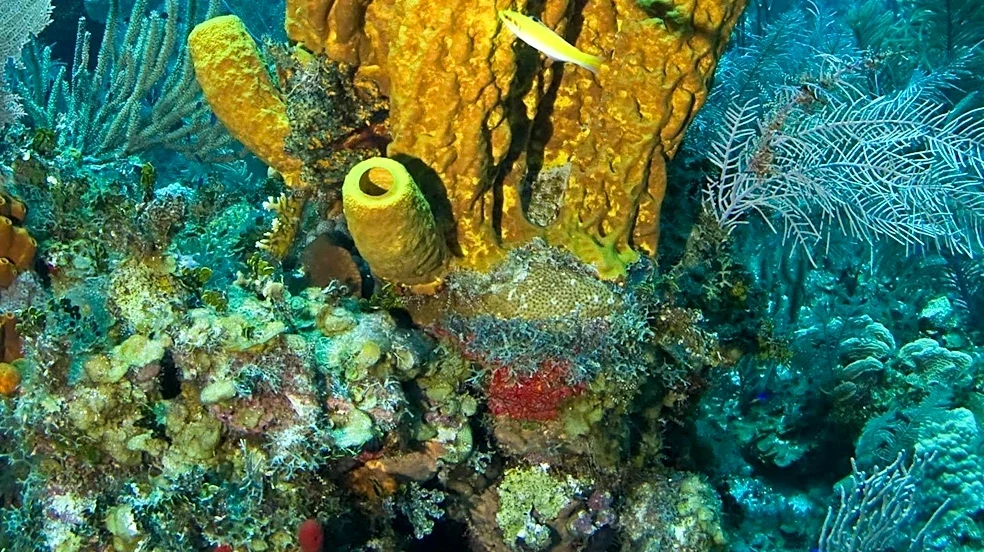
colonies, maintains its form through a flexible network of chitin within its tissues. This discovery resolves a century-old biological mystery regarding how such large, soft-bodied corals can withstand deep-sea currents without collapsing. Submersible expeditions conducted by marine scientists aboard the research ship Falkor utilized a remotely operated vehicle to survey rocky underwater terrain at depths of 2,200 feet below sea level. High-resolution camera arrays recorded dense coral gardens, and physical samples of an unidentified coral with distinctive tissue were collected. Chemical and microscopic analyses, including scanning electron microscopy and spectrography, revealed the complex web of chitin, a rigid and pliable polysaccharide commonly found in crab shells and insect exoskeletons. This is only the third time chitin has been reported in octocoral tissues across all Anthozoa species.
Why It's Important?
The discovery of *Paragorgia quitinosa* and its chitin-based structural support system is profoundly important for marine biology and our understanding of deep-sea ecosystems. It provides a crucial explanation for how large, soft-bodied organisms can thrive in the harsh conditions of the deep ocean, challenging previous assumptions about skeletal requirements for structural integrity. This finding sheds light on evolutionary questions and the biomechanics of soft tissue structures, offering new insights into the adaptability of marine life. Furthermore, the identification of this new species underscores the vast, unexplored biodiversity of deep-sea environments, particularly along seamount chains like the Nazca Ridge. Understanding these unique biological mechanisms can inform future research into biomaterials and engineering, potentially leading to novel applications inspired by nature. The study also highlights the critical need for continued deep-sea exploration and mapping to preserve these environments before species extinction, emphasizing the importance of marine conservation efforts.
What's Next?
While the discovery has explained the structural stability of *Paragorgia quitinosa*, direct biomechanical testing and measurements of the hydraulic pressure acting alongside the flexible chitin canals are yet to be conducted. Researchers hypothesize that this combination enables the branching stalks to bend, allowing the colony to gather food particles in turbulent deep waters. Future research will likely focus on these biomechanical tests to fully understand the dynamics of this unique structural system. The study also points out limitations in current deep-sea sampling methods, which can damage soft tissue structures, complicating chemical and biomechanical analyses. This suggests a need for advancements in sampling technology to better study delicate deep-sea organisms. Additionally, further investigations are required to determine if all species of bubblegum corals utilize the same density of chitin framework across different seafloor depths. Continued oceanic mapping of the seafloor is vital to identify and protect these unique deep-sea environments.
Beyond the Headlines
This discovery extends beyond marine biology, offering potential implications for materials science and bio-inspired engineering. The robust and flexible nature of chitin, as demonstrated in *Paragorgia quitinosa*, could inspire the development of new synthetic materials with similar properties for various applications, from medical implants to flexible robotics. The ability of a soft-bodied organism to construct massive structures without a rigid skeleton challenges conventional engineering principles and opens new avenues for research into self-assembling and adaptive materials. Ethically, the finding reinforces the importance of protecting deep-sea habitats, which are still largely unknown and potentially hold countless undiscovered species with unique biological solutions. The vulnerability of these ecosystems to human activities, such as deep-sea mining and climate change, becomes even more pressing when considering the potential for such groundbreaking discoveries. This research underscores the intrinsic value of biodiversity and the profound insights that can be gained from exploring the natural world.