



What's Happening?
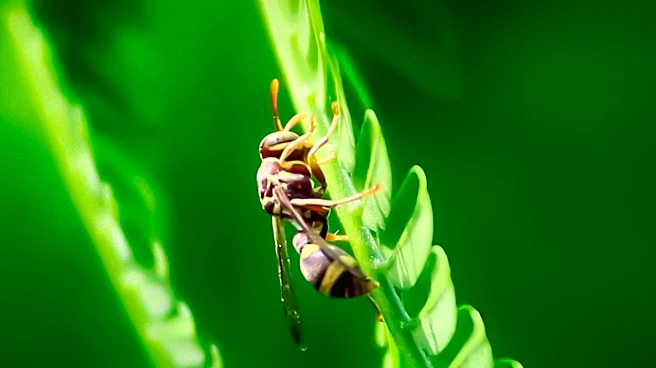
Michigan State University (MSU) researchers have initiated a long-term biological control program to combat the invasive scarlet lily beetle in Michigan. This effort involves releasing over 4,400 parasitoid wasps, which are natural enemies of the beetle,
across the state. The scarlet lily beetle is an invasive insect known for damaging lilies by feeding on their leaves, stems, and flowers, with heavy infestations capable of defoliating plants rapidly. Marianna Szűcs, an associate professor in MSU’s Department of Entomology, stated that this project required years of planning and coordination, building upon decades of research conducted in New England. The researchers established lily beds at the MSU Entomology Research Farm in 2022 to serve as nurseries for these biological control agents. Additionally, volunteers from the North American Lily Society assisted by planting lilies in their gardens to create more release sites.
Why It's Important?
This initiative is crucial for protecting lily populations and broader horticultural ecosystems in Michigan from the destructive impact of the invasive scarlet lily beetle. By employing parasitoid wasps, researchers are utilizing a biological control method, which offers an environmentally friendly alternative to chemical pesticides. This approach aims to re-establish a natural balance by introducing a specific predator for the pest, minimizing potential harm to other species and the environment. The long-term nature of this strategy means that while immediate results may not be seen, it offers a sustainable solution for managing invasive species. The collaboration between MSU researchers and the North American Lily Society highlights the importance of community involvement and scientific expertise in addressing ecological challenges, setting a precedent for future invasive species management programs.
What's Next?
The biological control program is a long-term strategy, meaning it will take several years for the parasitoid wasp populations to establish and effectively suppress the scarlet lily beetle numbers. Researchers will continue to monitor the spread and impact of the wasps, assessing their effectiveness in reducing beetle infestations and protecting lilies. Future efforts may involve expanding the release sites and further studying the population dynamics of both the beetles and the wasps. The project required and received approval from federal and state agencies, including the U.S. Department of Agriculture and the Michigan Department of Agriculture and Rural Development, ensuring regulatory compliance. Continued collaboration with volunteer groups like the North American Lily Society will be vital for the program's success and for gathering data from diverse locations across Michigan.
Beyond the Headlines
The use of highly host-specific parasitoid wasps in this biological control program underscores a critical ethical and scientific consideration in invasive species management: ensuring that the introduced control agents do not pose a threat to non-target native species. Extensive testing was conducted to confirm the wasps' specificity to the scarlet lily beetle, reflecting a commitment to ecological integrity. This project also highlights the challenges and complexities of biological control, as evidenced by the initial difficulty in collecting enough wasps from New England due to the success of existing containment efforts there. It demonstrates that effective long-term solutions often require patience, adaptive strategies, and a deep understanding of ecological interactions, moving beyond quick fixes to foster sustainable environmental health. The success of such programs can inform future strategies for managing other invasive pests, promoting biodiversity and ecosystem resilience.