




What's Happening?
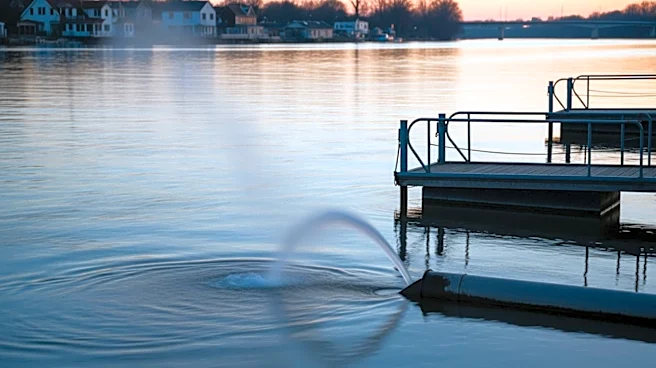
Three months after a massive sewage spill into the Potomac River, businesses reliant on the waterway are still experiencing financial difficulties. The spill, which released over 240 million gallons of raw sewage, has left a lasting stigma despite most
advisories being lifted. Marina operators, charter fishing businesses, and water-sport trainers report significant revenue losses as customers remain wary of the river's safety. The spill was caused by a rupture in the Potomac Interceptor pipeline, which had been delayed in repairs. Although water quality tests have deemed many areas safe, public perception has not fully recovered, affecting business operations and leading to financial claims against D.C. Water.
Why It's Important?
The ongoing impact of the sewage spill highlights the vulnerability of businesses dependent on natural resources and the importance of infrastructure maintenance. The financial strain on local businesses underscores the broader economic implications of environmental disasters. The situation also raises questions about public trust in water safety and the effectiveness of communication from authorities. The spill has prompted legal actions, including a lawsuit from the Justice Department and Maryland against D.C. Water, emphasizing the need for accountability and improved infrastructure management. The economic recovery of affected businesses will depend on restoring public confidence in the river's safety.
What's Next?
Efforts to restore public confidence in the Potomac River's safety are ongoing, with increased water quality monitoring and communication from D.C. Water. Businesses are hopeful for a recovery in the spring and summer seasons, but challenges remain as perceptions of the river's safety continue to affect customer behavior. Legal proceedings against D.C. Water may lead to further scrutiny and potential changes in infrastructure management practices. The outcome of these legal actions could influence future policies and investments in environmental protection and infrastructure maintenance.