







What's Happening?
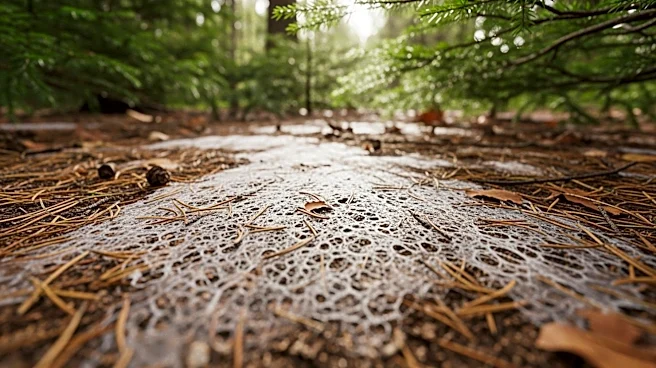
The largest known organism on Earth is a single fungus, Armillaria ostoyae, located in Oregon's Malheur National Forest. Covering nearly four square miles, this fungus is estimated to be between 2,000 and 8,500 years old. It has been slowly killing the
forest above it by infecting and feeding on tree roots. The fungus, also known as the honey mushroom, spreads through a network of underground filaments and rhizomorphs, making it a formidable forest pathogen. Its discovery highlights the complexity and scale of fungal organisms and their impact on forest ecosystems.
Why It's Important?
The existence of such a large and ancient organism challenges our understanding of life and ecosystems. The fungus's ability to persist and expand over millennia underscores the resilience and adaptability of fungal species. Its impact on the forest ecosystem raises questions about the balance between natural processes and human intervention in forest management. The discovery also highlights the importance of fungi in ecological cycles, as they play a crucial role in nutrient recycling and forest dynamics.
Beyond the Headlines
The story of the Malheur fungus invites reflection on the broader implications of fungal life forms. It challenges traditional notions of individuality and organism size, as the fungus operates on a scale that defies typical biological classifications. The fungus's longevity and impact on its environment prompt discussions about the role of fungi in shaping ecosystems over geological timescales. This discovery may inspire further research into the ecological functions and evolutionary history of fungi, contributing to a deeper understanding of biodiversity and ecosystem resilience.