



What's Happening?
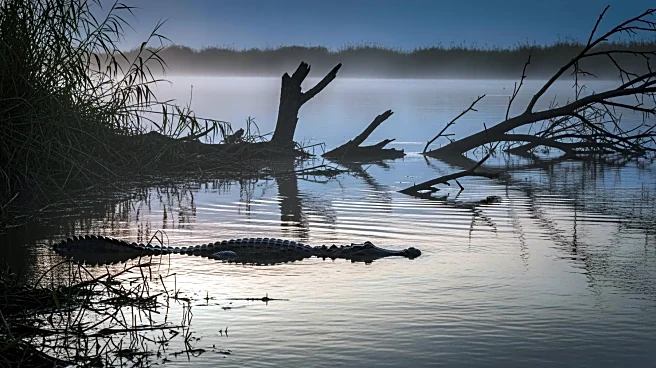
In Mozambique, severe flooding has resulted in crocodiles entering urban areas, leading to at least three deaths. The town of Xai-Xai, in Gaza province, is one of the most affected areas. The flooding, caused by torrential rains, has killed over 100 people
across Mozambique, South Africa, and Zimbabwe. The Limpopo River, which flows through Mozambique, has overflowed, allowing crocodiles to enter populated areas. Authorities have warned residents to avoid still waters due to the presence of crocodiles. The floods have also caused significant damage to infrastructure, including roads, bridges, and health facilities, affecting over 700,000 people.
Why It's Important?
The flooding in Mozambique highlights the vulnerability of infrastructure and communities to extreme weather events. The presence of crocodiles in urban areas poses a direct threat to human safety, while the destruction of infrastructure disrupts essential services. The situation underscores the need for improved disaster preparedness and response strategies in the region. The humanitarian crisis is exacerbated by the destruction of health facilities, leaving many without access to medical care. The risk of water-borne diseases, such as cholera, is also a concern, as displaced populations face limited access to clean water and sanitation.
What's Next?
Efforts to address the immediate needs of affected populations are underway, with humanitarian agencies working to provide relief and restore essential services. The World Health Organization has called for urgent action to deploy mobile health teams and ensure continuity of care for those with chronic conditions. Long-term, there is a need for investment in resilient infrastructure and community preparedness to mitigate the impact of future flooding events. The international community may also play a role in supporting Mozambique's recovery and strengthening its capacity to respond to natural disasters.