






What's Happening?
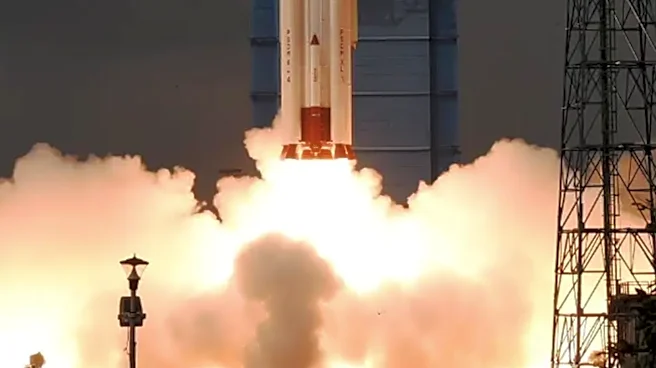
India is significantly advancing its space program, moving beyond foundational capabilities to embrace human spaceflight, deep-space exploration, and advanced space infrastructure. Key initiatives include the Gaganyaan human spaceflight program, which
aims to launch a crew of three Indian astronauts to a 400-km orbit for a three-day mission by 2027. This program, approved in 2019 and expanded in 2024 with an outlay of ₹20,193 crore, includes precursor flights for the Bharatiya Antariksh Station (BAS-01). India is also planning Chandrayaan-4, a lunar sample-return mission targeted for 2027, and the Venus Orbiter Mission for March 2028. These efforts build upon past successes like the Mars Orbiter Mission (Mangalyaan) in 2014, AstroSat in 2015, and Aditya-L1 in 2023, which is India's first space-based mission to study the Sun. The XPoSat mission in January 2024 further expanded India's capabilities in X-ray polarization astronomy. The country is also developing advanced technologies such as a 200-tonne thrust semi-cryogenic engine, booster recovery using Vertical Take-off and Vertical Landing (VTVL) technology, and a partially reusable Next Generation Launch Vehicle (NGLV).
Why It's Important?
India's ambitious space endeavors are crucial for its technological sovereignty and global standing. The expansion into human spaceflight with Gaganyaan and the planned Bharatiya Antariksh Station by 2035 signifies a major leap, positioning India among a select few nations capable of independent crewed missions and sustained human presence in space. This not only enhances national prestige but also fosters significant advancements in science, engineering, and research. Deep-space missions to the Moon (Chandrayaan-4) and Venus will contribute valuable scientific data and demonstrate India's growing capabilities in complex interplanetary operations. The development of indigenous launch vehicles and reusable rocket technology aims to reduce launch costs and increase frequency, making India a more competitive player in the global commercial space market. Furthermore, the integration of NavIC, India’s indigenous navigation system, into critical infrastructure and everyday services strengthens national autonomy in positioning, navigation, and timing, reducing reliance on foreign systems. These advancements are expected to fuel economic growth within the space sector, which is projected to reach USD 40–45 billion over the next decade.
What's Next?
The immediate future for India's space program includes several key milestones. The first uncrewed experimental mission for the Gaganyaan program, validating technologies including the Vyommitra half-humanoid, is targeted for Q4 of 2026, with the crewed mission aimed for 2027. The Bharatiya Antariksh Station (BAS-01) is planned for launch by 2028, with full operationalization targeted by 2035. Chandrayaan-4, a lunar sample collection and return mission, is scheduled for 2027, and the Venus Orbiter Mission is set for March 2028. India will also continue to develop advanced technologies, including a 200-tonne thrust semi-cryogenic engine, Vertical Take-off and Vertical Landing (VTVL) technology for booster recovery, and a partially reusable Next Generation Launch Vehicle (NGLV). Further SPADEX missions (SPADEX-2 and SPADEX-3) are being studied to advance orbital docking technologies crucial for future missions like Chandrayaan-4, Gaganyaan, and BAS. These steps will solidify India's position as a leading global space power.
Beyond the Headlines
India's aggressive push in space exploration carries profound implications beyond scientific and technological achievements. Ethically, the Gaganyaan program and the establishment of the Bharatiya Antariksh Station raise questions about the long-term sustainability of human presence in space and the responsible use of orbital resources. The focus on indigenous development and self-reliance, while bolstering national pride and technological independence, also positions India as a significant partner in international space collaborations, as evidenced by its signing of the Artemis Accords in 2023. This dual approach allows India to leverage global expertise while safeguarding its strategic interests. Culturally, these missions inspire a new generation of scientists and engineers, fostering a scientific temper and innovation within the country. The economic impact extends to job creation, the growth of a robust private space sector, and the development of dual-use technologies that can benefit various terrestrial industries. The long-term shift could see India playing a more prominent role in shaping global space governance and exploration norms, influencing how humanity approaches its future in space.