





What's Happening?
The World Food Programme (WFP) stands as the globe's largest humanitarian organization, dedicated to both immediate life-saving efforts in emergencies and the long-term goal of building peace, stability, and prosperity through food assistance. Its extensive
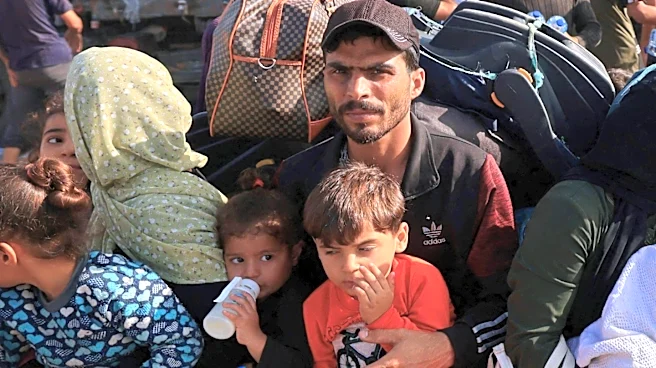
operations reach over 115.5 million individuals across more than 120 countries each year. The WFP's mandate encompasses aiding populations grappling with the aftermath of conflict, natural disasters, and the escalating impacts of climate change, providing crucial support to help them rebuild their lives. This vital work was recognized in 2020 when the WFP was awarded the Nobel Peace Prize, specifically for its role in bringing relief to exhausted communities in conflict situations and for strategically utilizing food aid to forge paths toward lasting peace and stability. Beyond its direct humanitarian interventions, the WFP places a strong emphasis on its internal organizational culture, particularly its commitment to fostering diversity, equity, and inclusion. The organization envisions a future workforce characterized by diverse, committed, skilled, and high-performing teams, selected solely on merit. This vision is supported by an inclusive recruitment process designed to welcome candidates from all backgrounds, ensuring accessibility and fairness. The WFP's dedication to these core values—Integrity, Collaboration, Commitment, Humanity, and Inclusion—is integral to its mission and its ability to operate effectively in complex global environments, working with partners to save and change lives.
Why It's Important?
The World Food Programme's extensive global operations hold profound importance for international stability and human development, particularly in an era marked by escalating food insecurity and complex humanitarian crises. By delivering essential food assistance, the WFP addresses immediate hunger and suffering, which is a fundamental human right, but also acts as a critical bulwark against further societal breakdown in regions ravaged by conflict, natural disasters, and the adverse effects of climate change. Its interventions are instrumental in mitigating factors that lead to mass displacement and forced migration, reducing the incidence of malnutrition-related health crises, and laying the groundwork for sustainable peace. The WFP's internal commitment to diversity, equity, and inclusion is equally significant. This organizational ethos ensures that its global workforce is representative and capable of operating with the highest degree of cultural sensitivity and effectiveness, thereby enhancing the quality and reach of its humanitarian aid. This internal integrity strengthens its ability to build trust and foster cooperation with local communities and international partners. Ultimately, the WFP's work highlights the intricate links between food security, global political stability, economic development, and human rights, demonstrating that investment in humanitarian aid is an investment in a more secure and prosperous world for all.
What's Next?
Looking ahead, the World Food Programme is poised to continue its critical mission of delivering humanitarian assistance and fostering long-term stability across its extensive operational footprint in over 120 countries. Its future endeavors will undoubtedly involve a dynamic adaptation to the constantly evolving landscape of global challenges, which include the emergence of new conflicts, the increasing frequency and intensity of climate-induced disasters, and persistent economic vulnerabilities that continue to drive food insecurity worldwide. The organization is expected to sustain its focus on pioneering innovative methods for food delivery, such as expanding the use of cash-based transfers where market conditions allow, and to further solidify its strategic partnerships with national governments, local communities, and other humanitarian and development agencies. These collaborations are essential for maximizing the reach and effectiveness of its aid. Internally, the WFP's steadfast commitment to diversity, equity, and inclusion will remain a central strategic imperative, guiding its recruitment processes and shaping its organizational culture. This ongoing internal development is vital for ensuring the WFP can attract, develop, and retain a high-performing, globally representative workforce capable of responding effectively to the diverse needs of the populations it serves. Concurrently, the WFP will likely intensify its advocacy efforts to draw global attention and secure necessary funding for humanitarian crises, continually emphasizing the fundamental link between food security and the achievement of sustainable peace, a principle underscored by its Nobel Peace Prize.
Beyond the Headlines
The WFP's dual focus on immediate relief and long-term peacebuilding through food assistance highlights a broader shift in humanitarian strategy, moving beyond mere emergency response to address the root causes of vulnerability. This integrated approach recognizes that food insecurity is often a symptom of deeper systemic issues, such as governance failures, economic disparities, and environmental degradation. By linking food aid to peace and stability, the WFP implicitly challenges traditional notions of security, suggesting that human security, underpinned by access to basic necessities, is as crucial as state security. The organization's emphasis on diversity and inclusion also reflects a growing understanding within the humanitarian sector that effective aid delivery requires not only logistical prowess but also cultural competence and equitable representation. This internal commitment helps to dismantle potential biases and ensures that aid programs are designed and implemented with a deep understanding of local contexts and needs. Furthermore, the WFP's role as a Nobel Peace Prize laureate elevates the discourse around food as a peace tool, encouraging policymakers to view food security not just as a humanitarian concern but as a strategic component of conflict prevention and resolution, thereby influencing international relations and development paradigms.