



What's Happening?
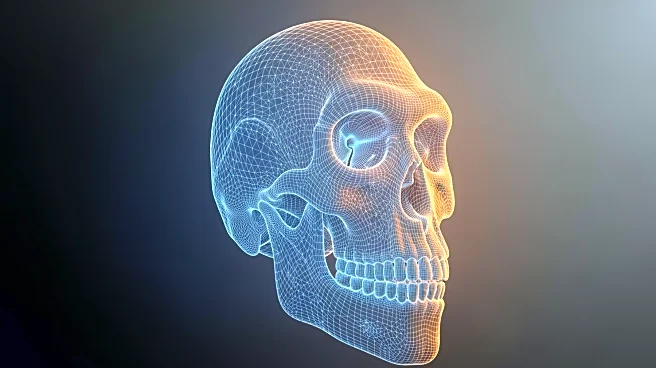
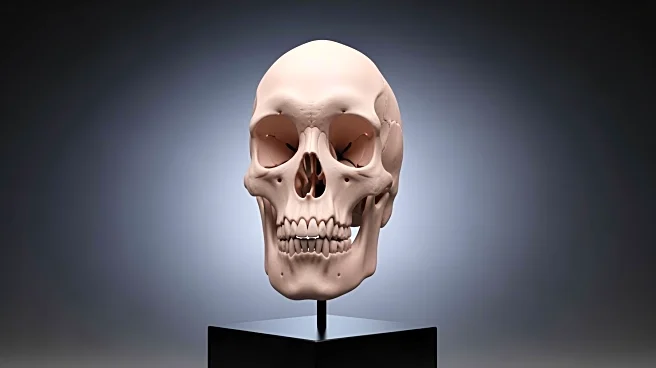
Scientists have successfully digitally reconstructed the face of 'Little Foot', a nearly 4 million-year-old human ancestor, using advanced imaging technology. The fossil, discovered in the 1990s in South Africa's Sterkfontein Caves, is the most complete
Australopithecus skeleton known, with 90% of its structure intact. The digital reconstruction was achieved by scanning the skull with high-resolution X-rays at the Diamond Light Source synchrotron in England, which allowed researchers to realign the facial bones virtually. This process revealed the upper part of the face, including the orbital region, for the first time. The reconstructed face was compared with other Australopithecus specimens and modern great apes, providing insights into the evolutionary history of early human ancestors.
Why It's Important?
The digital reconstruction of Little Foot's face is significant as it offers a rare glimpse into the anatomical features of early human ancestors, which can help scientists understand the evolutionary connections between hominins and modern humans. The study suggests that early hominin evolution was not isolated but occurred across a connected African landscape, with populations adapting to ecological pressures while maintaining shared ancestry. This research could influence how scientists interpret the evolutionary history of hominins and their adaptation strategies. Additionally, the findings may provide clues about the cognitive abilities and social interactions of early human ancestors, contributing to a deeper understanding of human evolution.
What's Next?
Researchers plan to use digital reconstruction methods to correct deformations in other parts of Little Foot's skull, such as the braincase, to gain insights into the brain size and cognitive abilities of early human ancestors. This ongoing research could further illuminate the evolutionary trajectory of hominins and their adaptation mechanisms. The study also opens up possibilities for similar reconstructions of other fossilized remains, potentially leading to new discoveries about the evolutionary history of humans.