







What's Happening?
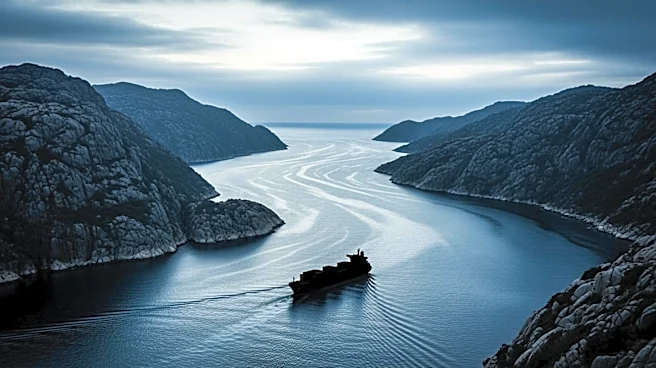
The Strait of Hormuz, a critical maritime passage, is experiencing significant disruptions due to tensions involving Iran. This narrow waterway, crucial for global trade, particularly in oil and liquefied natural gas, has seen reduced maritime traffic
as Iran imposes restrictions. The strait's strategic importance is underscored by its role in global energy security, with about one-fifth of the world's oil supply passing through it. Current disruptions have led to increased energy prices and economic uncertainty worldwide, as shipping volumes drop and insurance costs rise due to security threats.
Why It's Important?
The Strait of Hormuz is a vital chokepoint for global energy supplies, and its disruption has far-reaching economic implications. The current situation highlights the vulnerability of global supply chains to geopolitical tensions. Rising energy prices can lead to increased costs for consumers and businesses, potentially slowing economic growth. The situation also underscores the strategic importance of securing maritime routes and the potential for geopolitical conflicts to impact global markets. Countries reliant on oil imports are particularly affected, facing increased costs and potential supply shortages.
What's Next?
International leaders are likely to seek diplomatic solutions to ease tensions and restore normalcy in the Strait of Hormuz. Efforts may include negotiations with Iran to ensure safe passage for vessels and reduce the risk of further escalation. The situation may also prompt discussions on diversifying energy sources and routes to mitigate the impact of such disruptions in the future. Monitoring the developments in this region will be crucial for global economic stability, as prolonged disruptions could exacerbate existing economic challenges.