




What's Happening?
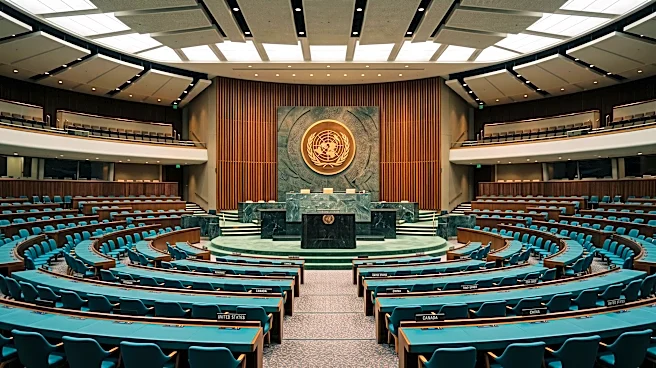
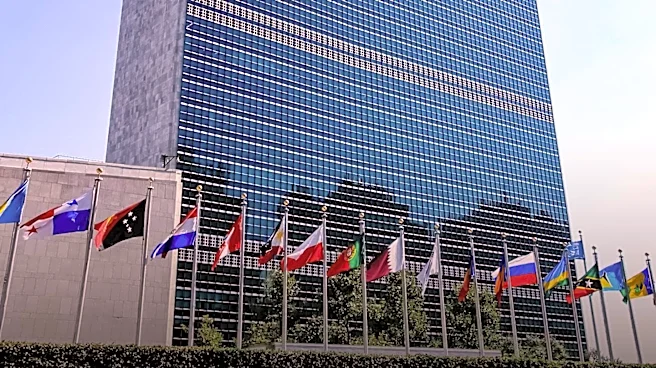
The United Nations General Assembly (UNGA) possesses the authority to convene an Emergency Special Session (ESS) if the Security Council is unable to reach a unanimous decision on a critical issue. This mechanism, established under the 'Uniting for Peace'
Resolution 377 A (V) adopted in 1950 during the Korean War, allows the UNGA to act when the Security Council's permanent members (P5) exercise their veto power, leading to inaction. An ESS can be triggered within 24 hours by a majority vote of Member States or a procedural vote in the Security Council (requiring 9 votes with no P5 veto). The UNGA has utilized this power on multiple occasions, including the 1st ESS during the Suez Crisis in 1956, the 10th ESS concerning Palestine, and the 11th ESS in response to the war against Ukraine in February 2022. These sessions demonstrate the UNGA's role in addressing pressing global issues when the Security Council is deadlocked.
Why It's Important?
This power of the UNGA is crucial for maintaining the relevance and functionality of the United Nations in situations where geopolitical divisions prevent the Security Council from fulfilling its primary responsibility for maintaining international peace and security. The ability to bypass a Security Council veto ensures that critical global issues, particularly those involving armed conflicts and humanitarian crises, can still be addressed at a multilateral level. It provides a platform for the broader international community to express its collective will and make recommendations, even if these resolutions are primarily recommendatory and not legally binding. This mechanism is particularly significant for smaller nations that may feel marginalized by the P5's veto power, offering them a voice and a means to influence international discourse and action. The invocation of ESS, such as for the war against Ukraine, highlights its importance in situations where a permanent member of the Security Council is directly involved in a conflict, thereby paralyzing the Council's ability to act.
What's Next?
The continued use of the Emergency Special Session mechanism by the UNGA is likely to be observed in future international crises where the Security Council faces a deadlock due to veto power. As global geopolitical tensions persist, the UNGA's role as an alternative forum for collective action and expression of international concern will remain vital. Member States will continue to assess the effectiveness of these sessions in influencing outcomes and shaping international opinion. The ongoing discussions within the UN regarding Security Council reform and the potential limitations of the veto power may also bring renewed attention to the 'Uniting for Peace' resolution and the UNGA's expanded role. The precedent set by recent ESS, particularly concerning major conflicts, suggests that this mechanism will remain a key tool for the international community to address urgent matters when traditional Security Council avenues are blocked.
Beyond the Headlines
The existence and utilization of the Emergency Special Session mechanism underscore a fundamental tension within the UN's structure: the balance between the Security Council's executive power and the General Assembly's broader representative mandate. While Security Council resolutions are legally binding, UNGA resolutions, even from an ESS, are generally recommendatory. However, they carry significant normative weight and can mobilize international opinion, provide political legitimacy for actions, and even lead to the establishment of peacekeeping forces, as seen with UNEF I during the Suez Crisis. This mechanism also raises questions about the evolving nature of international law and governance, particularly when the formal structures of power are challenged by the realities of global politics. It highlights the ongoing debate about the need for UN reform to better reflect contemporary global power dynamics and ensure more equitable and effective responses to international crises, especially when the interests of powerful states conflict with the broader international consensus.