


What's Happening?
The Department of Homeland Security (DHS) has announced emergency measures due to a government shutdown initiated by Congressional Democrats. As of February 22, 2026, DHS is taking steps to conserve resources and manpower, impacting various operations.
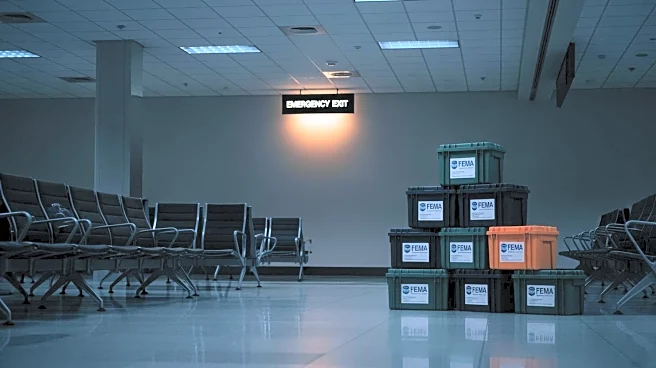
The Federal Emergency Management Agency (FEMA) will halt all non-disaster-related activities to focus on immediate disaster response. Customs and Border Protection (CBP) has ended its Global Entry service, and the Transportation Security Administration (TSA) will suspend all courtesy and special privilege escorts at airports. These measures are intended to prioritize disaster response and public safety amid limited funding and personnel. DHS Secretary Kristi Noem emphasized the real-world consequences of the shutdown, highlighting the impact on national security and the department's workforce.
Why It's Important?
The shutdown and subsequent emergency measures by DHS underscore the significant impact of political decisions on national security and public safety operations. The suspension of non-essential FEMA activities could delay recovery efforts for ongoing disasters, potentially affecting communities reliant on federal assistance. The halt of CBP's Global Entry service may inconvenience frequent travelers and impact international travel efficiency. TSA's suspension of special escorts could lead to longer wait times and reduced security efficiency at airports. These actions reflect the broader implications of government shutdowns, affecting not only federal employees but also the general public and critical infrastructure.
What's Next?
The continuation of these emergency measures depends on the resolution of the government shutdown. Once funding is restored, DHS plans to resume normal operations, including full recovery and assistance activities by FEMA. The political landscape may influence the duration of the shutdown, with potential negotiations between Congressional Democrats and Republicans. Stakeholders, including affected communities and travelers, may advocate for a swift resolution to minimize disruptions. The situation highlights the need for contingency planning and bipartisan cooperation to prevent future shutdowns and ensure uninterrupted public services.