
What's Happening?
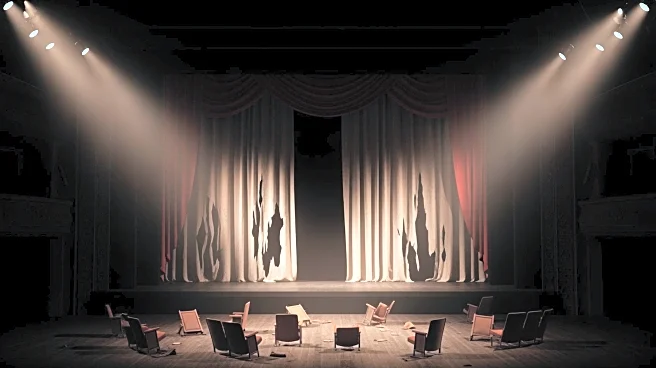
A theatre in Mariupol, Ukraine, which became a symbol of the city's devastation during a Russian siege in 2022, has reopened following extensive redevelopment. The reopening was marked by a special ceremony
featuring performances from artists in Mariupol and Saint Petersburg, Russia. The theatre, which was heavily damaged during the siege, has been restored with a new marble staircase, columns, and a large crystal chandelier. The siege of Mariupol by Russian forces resulted in significant destruction and loss of life, with thousands of deaths reported and a large portion of the city's population displaced. The United Nations reported that 90% of the city's buildings were damaged or destroyed during the conflict. The reopening of the theatre is part of Russia's efforts to transform Mariupol into a symbol of prosperity in the regions of Ukraine it controls.
Why It's Important?
The reopening of the Mariupol theatre is significant as it represents Russia's ongoing efforts to assert control and influence over the regions of Ukraine it has occupied. By restoring and reopening cultural landmarks, Russia aims to project an image of stability and prosperity in these areas. This move is part of a broader strategy to integrate these regions into Russia's socio-political framework, despite international condemnation and the ongoing conflict. The redevelopment of the theatre also highlights the cultural and historical ties Russia seeks to emphasize in its narrative of the conflict. For the local population, the reopening may offer a semblance of normalcy and cultural continuity, although it also underscores the complex dynamics of occupation and control in the region.
What's Next?
The reopening of the theatre may lead to further cultural and infrastructural projects in Mariupol and other occupied regions as Russia continues to consolidate its presence. This could involve more investments in rebuilding efforts and cultural exchanges with Russian cities. However, the international community is likely to continue its scrutiny and criticism of Russia's actions in Ukraine, potentially leading to further diplomatic tensions. The situation in Mariupol and other occupied areas remains fluid, with ongoing military and political developments that could impact the region's future.
Beyond the Headlines
The restoration of the Mariupol theatre raises questions about the ethical implications of cultural restoration in conflict zones. While the redevelopment may provide cultural and economic benefits, it also serves as a tool for political propaganda, potentially overshadowing the historical and human costs of the conflict. The theatre's reopening could be seen as an attempt to rewrite the narrative of the siege and occupation, focusing on reconstruction rather than the destruction and displacement that occurred. This highlights the complex interplay between culture, politics, and power in conflict-affected regions.