




What's Happening?
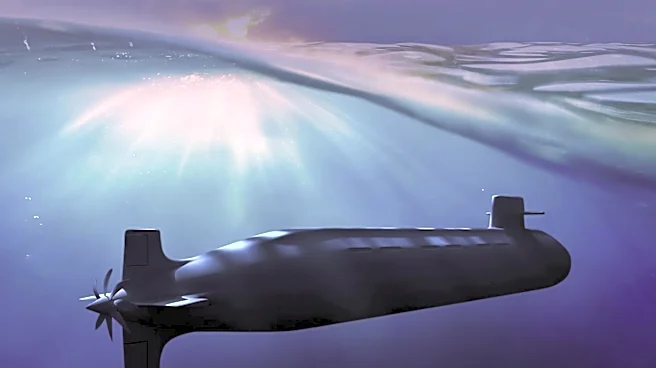
Vice Adm. Rob Gaucher, the Pentagon's Direct Reporting Portfolio Manager (DPRM) for Submarines, stated that delivering the first Columbia-class submarine, the USS District of Columbia, by the Navy's 2028 target is 'absolutely achievable.' This statement,
made during the Submarine League Annual Symposium, reflects a more optimistic outlook compared to his previous assessment in April, where he described the goal as a 'wicked heavy lift.' Gaucher acknowledged that the task remains challenging and requires significant effort, but his confidence has grown due to improved deck plate performance, goal alignment, enhanced production planning, and effective resolution of daily production bottlenecks. The submarine was initially slated for delivery in 2027, but Navy leaders in 2025 indicated a potential shift to 2029 due to supplier issues. However, the Navy and its shipbuilding partners, General Dynamics Electric Boat and HII’s Newport News Shipbuilding, established an acceleration plan in 2025 to deliver all modules to the final assembly yard by the end of 2025, aiming for the 2028 delivery.
Why It's Important?
The Columbia-class submarine program is critical for U.S. national security as these submarines are designed to replace the aging Ohio-class ballistic missile submarines, forming the sea-based leg of the nuclear triad. Meeting the 2028 delivery target is vital for maintaining the credibility and effectiveness of the nation's strategic deterrence capabilities. Delays in this program could create gaps in the U.S. nuclear deterrent posture, potentially impacting geopolitical stability and the balance of power. The program also represents a significant investment in the U.S. defense industrial base, supporting thousands of jobs in shipbuilding and related industries. Successful delivery on schedule would demonstrate the Navy's ability to manage complex, high-priority acquisition programs despite previous challenges related to workforce and supply chain issues, which had led to earlier projected delays of 12 to 16 months for the District of Columbia.
What's Next?
The focus will remain on the continued execution of the acceleration plan by General Dynamics Electric Boat and HII’s Newport News Shipbuilding to ensure all modules for the USS District of Columbia are delivered to the final assembly yard as planned. Regular reviews of deck plate performance, production planning, and bottleneck resolution will be crucial to maintaining the current optimistic trajectory. The Navy will likely continue to monitor progress closely, with future updates expected on the construction status of the first submarine, which was approximately 65 percent complete earlier this year. The second Columbia-class submarine, the future USS Wisconsin, is also under construction and was roughly 35 percent complete, indicating that the program's overall progress will be under scrutiny as the Navy aims for full-rate construction in the early 2030s.
Beyond the Headlines
The renewed confidence in the Columbia-class submarine delivery highlights the persistent challenges and strategic importance of large-scale defense procurement. It underscores the delicate balance between technological ambition, industrial capacity, and geopolitical necessity. The program's success or failure has broader implications for the U.S. defense industry's ability to meet future demands for advanced military hardware, especially in an era of increasing global competition. Furthermore, the emphasis on 'deck plate performance' and 'production planning' points to the critical role of skilled labor and efficient manufacturing processes in national security projects. This program serves as a bellwether for the health and resilience of the U.S. shipbuilding sector and its capacity to deliver on complex, long-term strategic objectives.