


What's Happening?
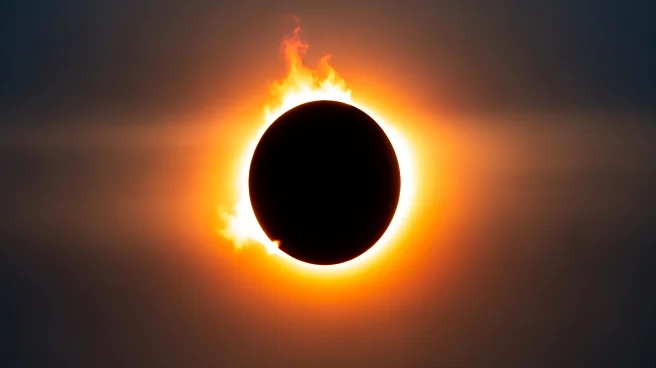
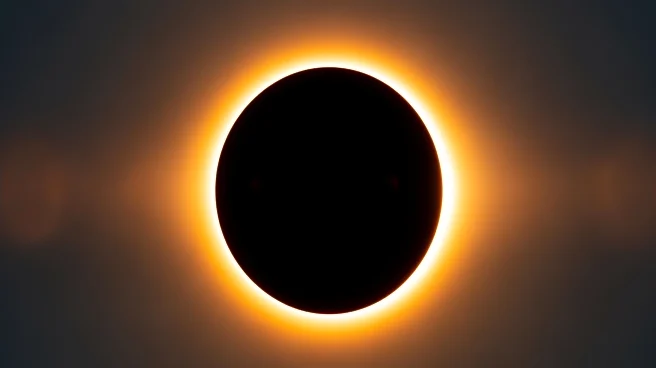
An annular solar eclipse, known as a 'ring of fire', is set to occur, primarily visible in Antarctica. According to NASA, this celestial event will take place when the moon passes between the Earth and the sun at its apogee, the farthest point from Earth.
This positioning results in the moon not completely covering the sun, creating a ring-like appearance. While the full annular eclipse will be visible in parts of Antarctica, a partial eclipse can be observed in the southernmost regions of Africa and South America. The eclipse will begin at 11:45 UTC (6:45 am EST) and reach maximum coverage of 96 percent, gradually decreasing as the day progresses.
Why It's Important?
This solar eclipse is significant as it offers a rare opportunity for scientific observation and public interest in astronomy. Although Antarctica lacks permanent residents, researchers and temporary inhabitants will have a unique chance to study the phenomenon. The event also highlights the importance of global scientific collaboration, as data collected can contribute to understanding celestial mechanics and solar phenomena. For the general public, such events spark interest in space science and can inspire educational initiatives.
What's Next?
As the eclipse progresses, observers in the southern tips of Chile, Argentina, and parts of southeastern Africa, including Madagascar, Lesotho, and South Africa, may witness the partial eclipse, weather permitting. This event may lead to increased interest in future astronomical events and potential tourism to regions where such phenomena are visible. Scientists will likely analyze data collected during the eclipse to enhance understanding of solar and lunar interactions.
Beyond the Headlines
The eclipse underscores the broader cultural and scientific fascination with celestial events. It serves as a reminder of the interconnectedness of global communities through shared natural phenomena. Additionally, it highlights the challenges and opportunities in observing such events from remote locations like Antarctica, emphasizing the role of technology and international cooperation in expanding human knowledge.