







What's Happening?
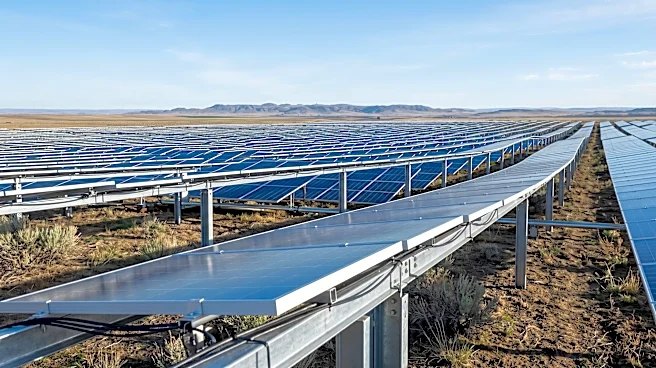
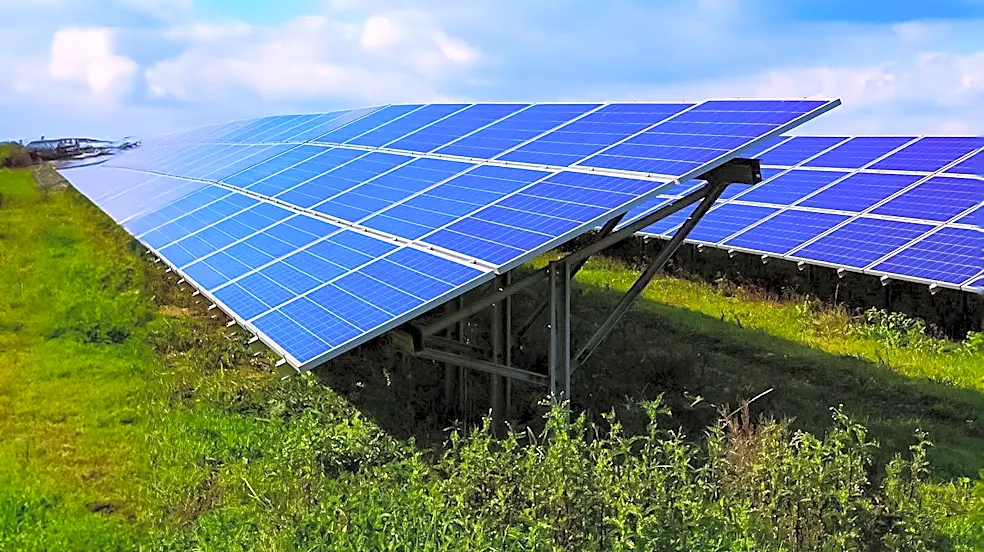
Standard Solar has acquired two ground-mounted solar projects in eastern Washington from OneEnergy Renewables, significantly expanding its presence in the Pacific Northwest. These projects, named Palouse Junction in Connell and Cunningham in Othello,
will collectively add 15.79 MW of new clean energy capacity. The Palouse Junction project, with 12.1 MW DC capacity, is projected to generate approximately 22,339 MWh in its first year, while the Cunningham project, at 3.69 MW DC, will contribute roughly 6,917 MWh. Both projects are expected to be completed by Q1 2027. Franklin Public Utility District will purchase 10 MW AC from Palouse Junction, and Big Bend Electric Cooperative will acquire 3 MW AC from Cunningham. OneEnergy Renewables is serving as both the developer and EPC provider for these installations, streamlining the coordination process.
Why It's Important?
This acquisition is important for the U.S. clean energy landscape, particularly for rural communities in eastern Washington. It highlights a growing trend where rural utilities are increasingly turning to distributed solar to bolster local power supplies. For Franklin Public Utility District and Big Bend Electric Cooperative, both publicly accountable entities, these projects offer locally generated clean electricity, reducing reliance on energy transmitted over long distances and supporting long-term energy planning. This model of community-scale solar, built close to consumption points and tailored to local utility needs, demonstrates a viable pathway for expanding access to renewable energy in areas often overlooked by larger-scale projects. The involvement of Standard Solar, a Brookfield portfolio company, also signals significant financial backing and strategic intent to further expand in the Pacific Northwest, indicating a robust market for such distributed generation projects.
What's Next?
Standard Solar has indicated that this acquisition is part of a broader strategy to expand its portfolio in Washington and across the Pacific Northwest, suggesting more such projects are likely in the pipeline. The company's access to safe-harbored solar panels provides a strategic advantage, allowing for more efficient project development and construction by locking in equipment purchases to qualify for federal tax incentives. This flexibility is crucial in a market sensitive to policy shifts. The partnership between Standard Solar and OneEnergy Renewables, their first in Washington, is expected to continue given Standard Solar's stated appetite for more projects in the region. This ongoing collaboration will likely lead to further development of community-scale solar installations, reinforcing the role of rural utilities as key players in the distributed solar market and contributing to Washington's broader clean energy goals.
Beyond the Headlines
Beyond the immediate energy supply benefits, these projects carry deeper implications for regional economic development and energy independence in rural U.S. areas. By providing locally generated power, these solar farms can create local jobs during construction and operation, fostering economic growth within the communities they serve. The emphasis on public utility districts and electric cooperatives, which are directly accountable to their ratepayers, suggests a model of energy development that prioritizes community needs and local control over energy resources. This could lead to increased energy literacy and engagement among residents, as they directly benefit from and have a say in their energy sources. Furthermore, the success of these projects could serve as a blueprint for other rural regions across the U.S., demonstrating how distributed solar can enhance energy resilience, reduce environmental impact, and contribute to a more decentralized and democratic energy system.