





What's Happening?
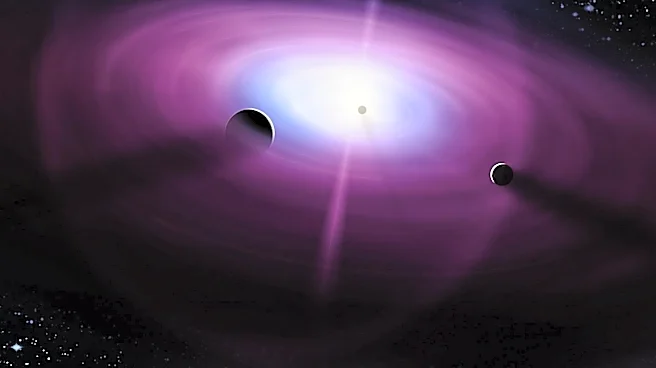
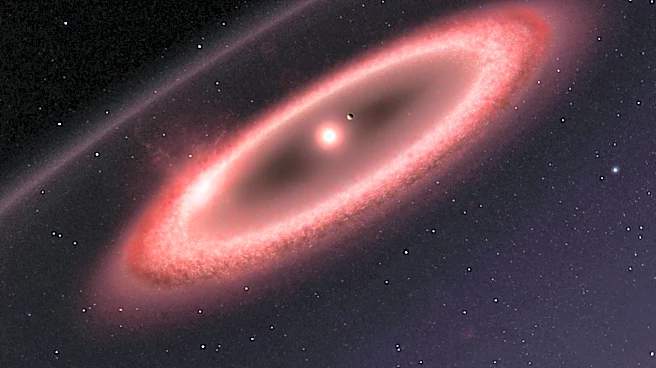
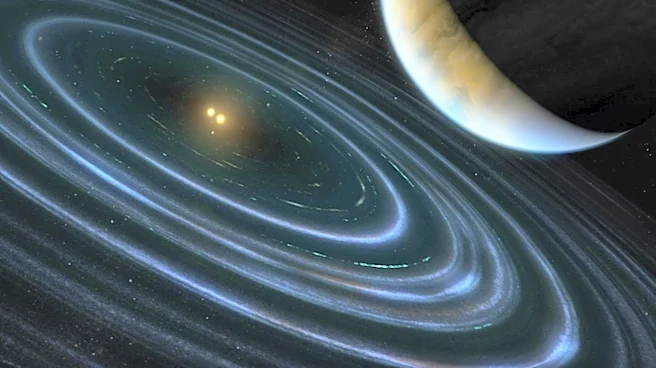
Astronomers have identified a candidate for a 'second-generation' planet orbiting the white dwarf star HS 0209+0832, located approximately 270 light-years from Earth. This potential planet is believed to have formed from material ejected by the star as
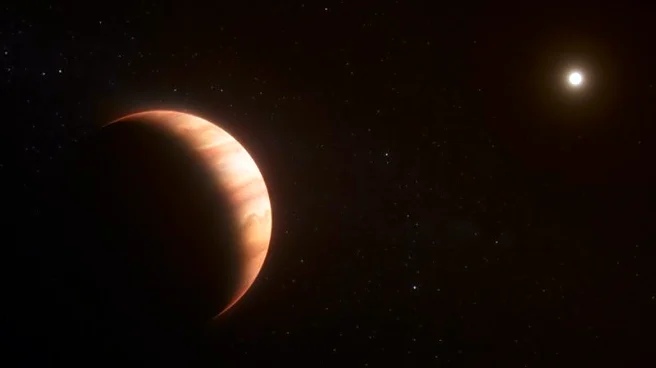
it died, a process that would represent a cosmic rebirth. Observations from NASA’s Hubble Space Telescope revealed unusually high amounts of heavy elements in the white dwarf’s atmosphere, including zinc, copper, and notably, niobium, which was found at levels over 1,000 times greater than in the Sun. These elements are typically produced during the later stages of a star's life. Further data from NASA’s Transiting Exoplanet Survey Satellite (TESS) detected a regular brightness signal repeating every 4.4 days, consistent with a gas giant, roughly the size of Jupiter, orbiting very close to the white dwarf. This close proximity suggests the planet is losing its atmosphere due to the white dwarf’s intense radiation, with some of this escaping material potentially falling back onto the star, explaining the unusual elemental composition. If confirmed, this would be the first known example of a planet forming from the remnants of its dead star.
Why It's Important?
This discovery challenges conventional understanding of planet formation, which typically posits that planets form from a protoplanetary disk around a young star. The existence of a 'second-generation' planet suggests that planetary formation can occur even after a star's initial life cycle has ended and its original planetary system has been disrupted. This opens new avenues for astrophysical research into how planetary systems evolve and regenerate. The unique chemical signature, particularly the high concentration of niobium, provides a novel method for detecting such planets by analyzing the atmospheric composition of white dwarfs. This could lead to the identification of more such systems, expanding our knowledge of exoplanets. Furthermore, this finding offers a potential glimpse into the distant future of our own solar system, as our Sun will eventually become a white dwarf. The possibility that new planets could form from the Sun's remnants raises profound questions about the long-term evolution and potential for habitability in stellar systems.
What's Next?
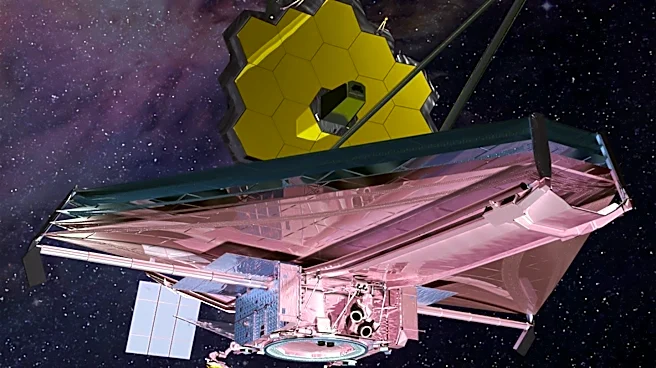
The identified object is currently considered a candidate, and further observations are required to definitively confirm its existence and origin. Researchers plan to conduct additional studies using instruments like the Hubble Space Telescope, Chandra, and the James Webb Space Telescope to gather more data. If confirmed, this discovery will prompt astronomers to search for similar chemical 'fingerprints' in the atmospheres of other white dwarfs, potentially uncovering more second-generation planets. This new method of detection, focusing on the chemical traces of material accreting onto white dwarfs, could become a significant tool in exoplanet research. The scientific community will also focus on refining models of planet formation under these extreme conditions, particularly how a disk of material can coalesce around a dying star, possibly with the aid of a companion star. Understanding these mechanisms will be crucial for assessing the prevalence of such 'phoenix planets' across the galaxy.
Beyond the Headlines
The concept of a 'second-generation' planet forming from the ashes of a dead star introduces a fascinating narrative of cosmic rebirth, akin to the mythical phoenix. This challenges the notion of stellar death as a definitive end for planetary systems, suggesting instead a potential for renewal and new beginnings. Ethically, it expands our perspective on the resilience and adaptability of matter in the universe, hinting that life, if it were to arise on such a world, could potentially exist in vastly different and longer-lived environments around cooling white dwarfs. Legally, while not directly applicable, the discovery pushes the boundaries of our scientific understanding, which often underpins future space exploration policies and resource allocation for astronomical research. Culturally, it fuels imagination about the universe's capacity for transformation and the cyclical nature of cosmic phenomena, potentially influencing science fiction and public engagement with astronomy. This development underscores the dynamic and ever-evolving nature of the cosmos, where destruction can pave the way for new creation.