









What's Happening?
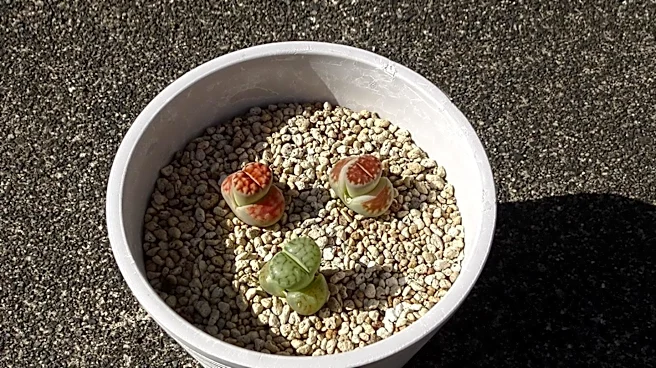
Lithops werneri, a critically endangered succulent, is found in a small area of Namibia's Erongo Mountains. The plant has experienced an 80% decline in population since 1981, with fewer than 200 plants remaining in the wild. The species was listed as critically endangered on the IUCN
Red List in February 2026. Historically, the plant was heavily harvested for the horticulture market in Europe, leading to its near extinction. Rediscovered in 2012, the plant's population has continued to decline due to illegal collection and climate change. The plant's shallow root system makes it vulnerable to droughts and flooding, which can dislodge the plants and expose their roots, leading to death.
Why It's Important?
The decline of Lithops werneri highlights the broader issue of biodiversity loss and the impact of human activities on endangered species. The illegal collection of plants for horticulture markets poses a significant threat to their survival. Additionally, climate change exacerbates these threats by altering habitats and increasing the frequency of extreme weather events. The conservation of species like Lithops werneri is crucial as they are integral to their ecosystems and can be indicators of environmental health. Efforts to address plant poaching and habitat preservation are essential to prevent the extinction of such species.
What's Next?
Conservation efforts are underway to address the threats facing Lithops werneri. Collaborators in Namibia are working to combat plant poaching, which has increased exponentially in recent years. Protecting the plant's habitat from climate change-induced disturbances is also a priority. Continued monitoring and research are needed to understand the plant's ecological requirements and to develop effective conservation strategies. The involvement of local communities and international conservation organizations will be crucial in ensuring the survival of Lithops werneri.