


What's Happening?
Isaiah Zagar, a renowned mosaic artist and founder of Philadelphia's Magic Gardens, has died at the age of 86. Zagar, who was known for his vibrant and intricate mosaics, passed away due to complications from congestive heart failure and Parkinson's disease.
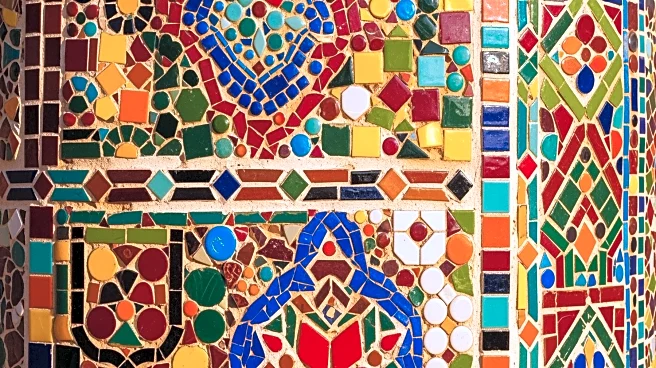
Throughout his life, Zagar created over 200 mixed-media pieces on public walls, significantly contributing to the revitalization of South Street in Philadelphia. His most notable work, the Magic Gardens, is a large-scale art environment that showcases his unique style, characterized by swirling mosaics with mirrors and hand-painted tiles. Zagar's artistic journey began as a form of therapy following a mental health crisis, and he was heavily influenced by Latin American folk art traditions. His work has left an indelible mark on Philadelphia, with pieces displayed in various locations across the city and beyond.
Why It's Important?
Isaiah Zagar's contributions to the art world and the city of Philadelphia are significant. His work not only beautified public spaces but also played a crucial role in the cultural and economic revitalization of South Street, an area that was once slated for demolition. By transforming vacant lots and abandoned buildings into vibrant art spaces, Zagar helped foster a sense of community and cultural identity. His mosaics have become iconic landmarks, attracting tourists and art enthusiasts, thereby boosting local businesses and the economy. Zagar's legacy extends beyond his art; he inspired countless artists and individuals to view art as a means of personal expression and healing. His influence is evident in the continued popularity of the Magic Gardens and the ongoing appreciation for public art in urban environments.
What's Next?
A public memorial for Isaiah Zagar will be announced at a later date, allowing the community to celebrate his life and contributions. The Magic Gardens, along with other institutions that house his work, will likely continue to preserve and promote his legacy. As Philadelphia's art scene evolves, Zagar's influence will remain a guiding force for future artists and cultural projects. The preservation of his work, particularly in areas facing redevelopment pressures, will be a key focus for local art advocates and community members. Additionally, the impact of Zagar's art on mental health awareness and therapy through creative expression may inspire further initiatives and programs in the city.