



What's Happening?
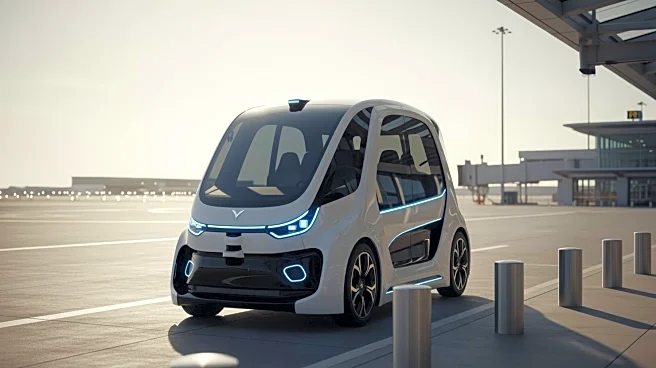
The Port Authority of New York and New Jersey is set to test self-driving shuttles at Newark Liberty International Airport this spring. These autonomous shuttles will operate between the airport's existing facilities and a new AirTrain system currently
under construction, which is expected to open in 2030. The initiative involves zero-emission electric vehicles and aims to enhance passenger movement efficiency. Three companies, Oceaneering, Ohmio, and Glydways, will conduct two-week trials of their shuttles from March to late May. This testing is part of a broader effort to integrate modern travel solutions at the airport, building on previous experiences with autonomous vehicles at other locations, such as John F. Kennedy International Airport.
Why It's Important?
The introduction of self-driving shuttles at Newark Liberty International Airport represents a significant step towards modernizing transportation infrastructure. By adopting autonomous technology, the Port Authority aims to improve passenger experience and operational efficiency while reducing emissions. This move aligns with global trends in transportation innovation, potentially setting a precedent for other airports. The successful implementation of these shuttles could lead to broader adoption of autonomous vehicles in public transit systems, influencing future transportation policies and infrastructure investments. Stakeholders, including passengers and airport operators, stand to benefit from enhanced mobility solutions and reduced environmental impact.
What's Next?
Following the trials, the Port Authority will evaluate the performance of the self-driving shuttles to determine their feasibility for long-term use. The results could influence future decisions regarding the integration of autonomous vehicles in airport operations. Additionally, the ongoing construction of the new AirTrain system will continue, with its completion anticipated by 2030. Stakeholders, including transportation planners and environmental advocates, will likely monitor the outcomes closely, as they could impact future transportation projects and sustainability initiatives.