







What's Happening?
Prime Minister Narendra Modi is set to inaugurate the CG Power Semiconductor Outsourced Semiconductor Assembly and Test (OSAT) facility in Sanand, Gujarat. This facility is part of India's broader initiative to establish a robust semiconductor manufacturing
ecosystem. Developed with an investment exceeding Rs 7,500 crore, the facility is one of the first four semiconductor projects approved under the 'India Semiconductor Mission'. The facility will provide comprehensive semiconductor assembly and testing services, with an expected annual production capacity of up to five billion semiconductor chips. These chips will serve various sectors, including automotive, industrial, telecommunications, 5G, and the Internet of Things. The inauguration marks a significant step in positioning Gujarat as a leading hub for semiconductor manufacturing in India.
Why It's Important?
The establishment of the CG Semi OSAT facility is a critical development in India's efforts to become a significant player in the global semiconductor industry. By enhancing domestic manufacturing capabilities, India aims to reduce its reliance on imports and strengthen its position in the global electronics supply chain. The facility is expected to create numerous employment opportunities, particularly for technocrats, and stimulate further industrial growth in Gujarat. This development aligns with India's strategic goals to boost technological self-reliance and economic growth, potentially attracting more investments in the semiconductor sector.
What's Next?
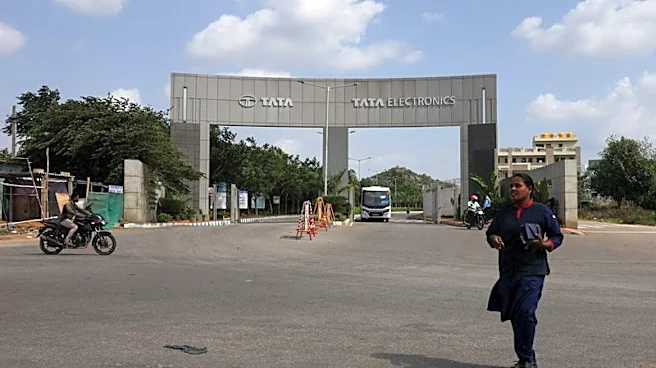
Following the inauguration, the CG Semi OSAT facility will commence commercial production. The success of this facility could lead to the establishment of additional semiconductor plants in Gujarat and other parts of India. The state government, under Chief Minister Bhupendra Patel, is actively promoting Gujarat as a prime destination for semiconductor investments, with several projects already underway. The Tata semiconductor fabrication plant in Dholera, for instance, is expected to begin production in 2027. These developments are likely to enhance India's competitiveness in the global semiconductor market and contribute to the country's economic development.