





What's Happening?
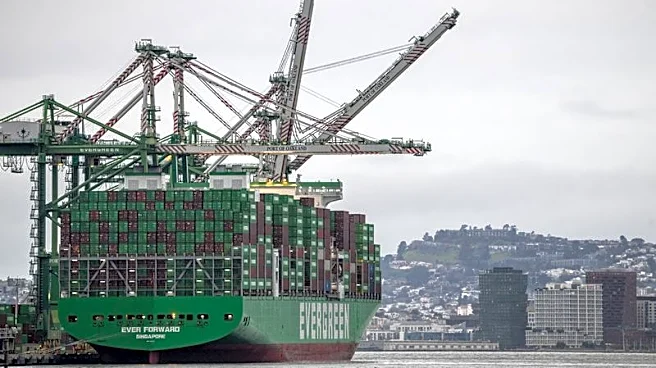
A recent ruling by the U.S. Court of International Trade has declared President Trump's 10% global tariffs unlawful. The decision was made by a divided three-judge panel, which concluded that the tariffs exceeded presidential authority. This ruling is significant
as it challenges the scope of executive power in imposing trade measures. The tariffs, which were implemented during President Trump's administration, aimed to protect American industries but faced criticism for their broad application and potential to disrupt international trade relations. The court's decision has drawn attention from various stakeholders, including markets and legal experts, as it may set a precedent for future executive actions related to trade.
Why It's Important?
The court's ruling is pivotal as it questions the extent of presidential authority in trade matters, potentially reshaping the executive branch's role in international commerce. This decision could lead to increased scrutiny of executive actions and encourage more checks and balances in trade policy formulation. For U.S. industries, the ruling may result in changes to tariff structures, affecting sectors that benefited from or were harmed by the tariffs. Additionally, the decision could influence future administrations' approaches to trade policy, emphasizing the need for legislative involvement in significant trade decisions. The ruling also highlights the ongoing debate over the balance of power between the executive and legislative branches in shaping U.S. trade policy.
What's Next?
The ruling is likely to be appealed, which could lead to further legal battles and potentially reach the Supreme Court. The outcome of these proceedings will be closely watched by businesses, policymakers, and international trade partners, as it could redefine the boundaries of executive power in trade matters. In the meantime, industries affected by the tariffs may seek adjustments or relief, while trade partners may reassess their strategies in dealing with U.S. trade policies. The decision also opens the door for Congress to play a more active role in trade policy, potentially leading to new legislation that clarifies the limits of executive authority in imposing tariffs.