





What's Happening?
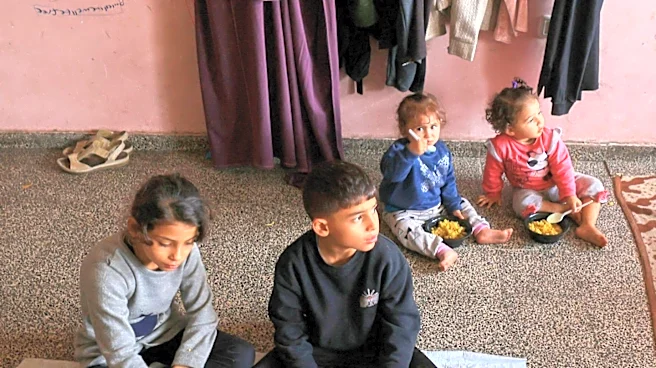
The King Salman Humanitarian Aid and Relief Center (KSrelief) has distributed 25,000 hot meals to vulnerable populations in the central and southern Gaza Strip. This initiative is part of a broader Saudi campaign aimed at providing relief to the Palestinian
people in the region. The meals were prepared and distributed through a central kitchen operated by KSrelief, benefiting 25,000 individuals. This effort underscores Saudi Arabia's ongoing commitment to humanitarian support for those in need, particularly during times of crisis in the Palestinian territories. The distribution highlights the continuous need for food assistance in Gaza and the role of international and regional organizations in addressing these critical humanitarian requirements.
Why It's Important?
This distribution of hot meals is important as it directly addresses the immediate food security needs of a significant number of individuals in the Gaza Strip, a region frequently facing humanitarian challenges. Such aid is crucial for sustaining vulnerable populations who may lack consistent access to adequate nutrition due to ongoing conflicts or economic hardships. The involvement of KSrelief, a Saudi-backed organization, also signifies the continued engagement of regional powers in humanitarian efforts within the Palestinian territories. This support can help alleviate some of the pressures on local communities and health services, which are often strained. Furthermore, these actions can contribute to regional stability by demonstrating tangible support for affected populations, potentially mitigating broader humanitarian crises and their associated social and political ramifications.
What's Next?
Continued humanitarian efforts from organizations like KSrelief are anticipated to address the persistent needs in the Gaza Strip. The ongoing nature of the Saudi campaign suggests that further distributions of food and other essential aid are likely. International and regional bodies will continue to monitor the humanitarian situation in Gaza, assessing needs and coordinating responses. The effectiveness and reach of these aid operations will depend on various factors, including funding, logistical access, and the prevailing security conditions in the region. Future initiatives may also focus on broader recovery and development projects beyond immediate relief, aiming for more sustainable solutions to the challenges faced by the Palestinian people.
Beyond the Headlines
The distribution of humanitarian aid, such as hot meals, in the Gaza Strip carries implications beyond immediate relief. It highlights the complex interplay of humanitarian action, regional politics, and the ongoing challenges faced by the Palestinian population. While providing essential sustenance, these efforts also draw attention to the underlying issues that necessitate such aid, including conflict, displacement, and economic instability. The involvement of state-backed organizations like KSrelief can also be seen as an exercise of soft power, reinforcing diplomatic ties and regional influence. The long-term impact of such aid depends not only on its consistent delivery but also on broader political resolutions that address the root causes of the humanitarian crisis, ensuring sustainable peace and development for the affected communities.