



What's Happening?
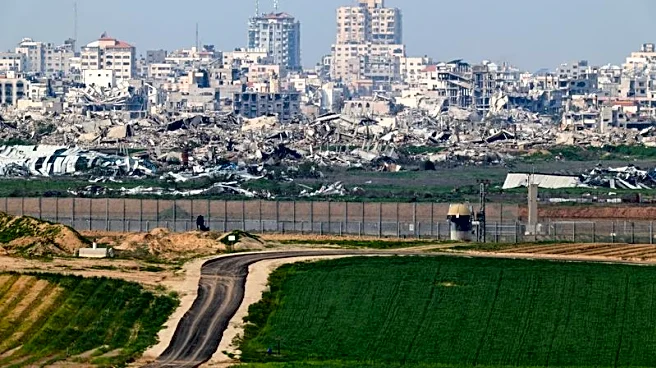
The partial reopening of the Rafah crossing between Gaza and Egypt has been marked by confusion and logistical challenges, resulting in fewer Palestinians crossing than anticipated. Initially, it was expected that 150 Palestinians would be allowed to
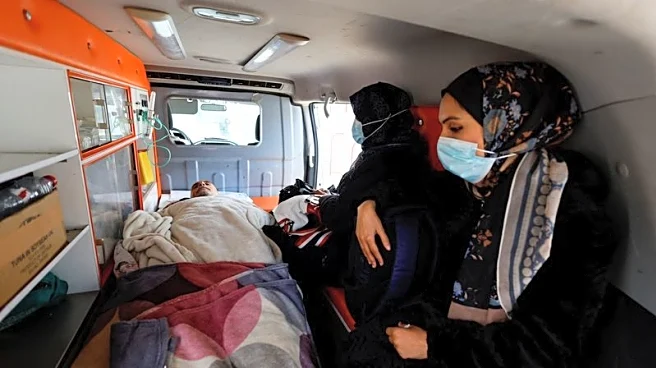
leave Gaza daily, with 50 permitted to enter. However, during the first week, only a fraction of these numbers crossed, with just 12 Palestinians crossing in each direction on the first day and 40 on the second. Many Palestinians, including those medically evacuated to Egypt, were barred from re-entering Gaza despite prior approvals. The crossing process involves multiple security checks by Egyptian forces, the European Union Border Assistance Mission to Rafah (EUBAM), and the Israeli military, leading to long delays and reports of mistreatment.
Why It's Important?
The reopening of the Rafah crossing is significant as it affects the movement of Palestinians between Gaza and Egypt, impacting those seeking medical treatment abroad. The confusion and restrictions at the crossing highlight ongoing tensions and logistical challenges in the region. The situation underscores the humanitarian issues faced by Palestinians, with many unable to return home or access necessary medical care. The restrictions on belongings and cash further complicate the return process, affecting the daily lives of those involved. The broader implications include potential diplomatic tensions and the need for improved coordination among the involved parties to ensure smoother operations at the crossing.
What's Next?
Efforts to streamline the crossing process are expected to continue, with authorities working to clarify restrictions and improve coordination. The situation may prompt further diplomatic discussions between Israel, Egypt, and international bodies to address the logistical and humanitarian challenges. The ongoing issues at the crossing could lead to increased scrutiny from human rights organizations and calls for more transparent and humane treatment of Palestinians. The response from the international community and potential policy adjustments will be crucial in shaping the future operations of the Rafah crossing.
Beyond the Headlines
The reopening of the Rafah crossing highlights deeper issues related to the Israeli-Palestinian conflict, including the impact of border restrictions on civilian life and the humanitarian needs of the Palestinian population. The situation raises ethical questions about the treatment of individuals at border crossings and the balance between security measures and human rights. Long-term, the challenges at the Rafah crossing may influence broader discussions on border policies and the rights of displaced populations in conflict zones.